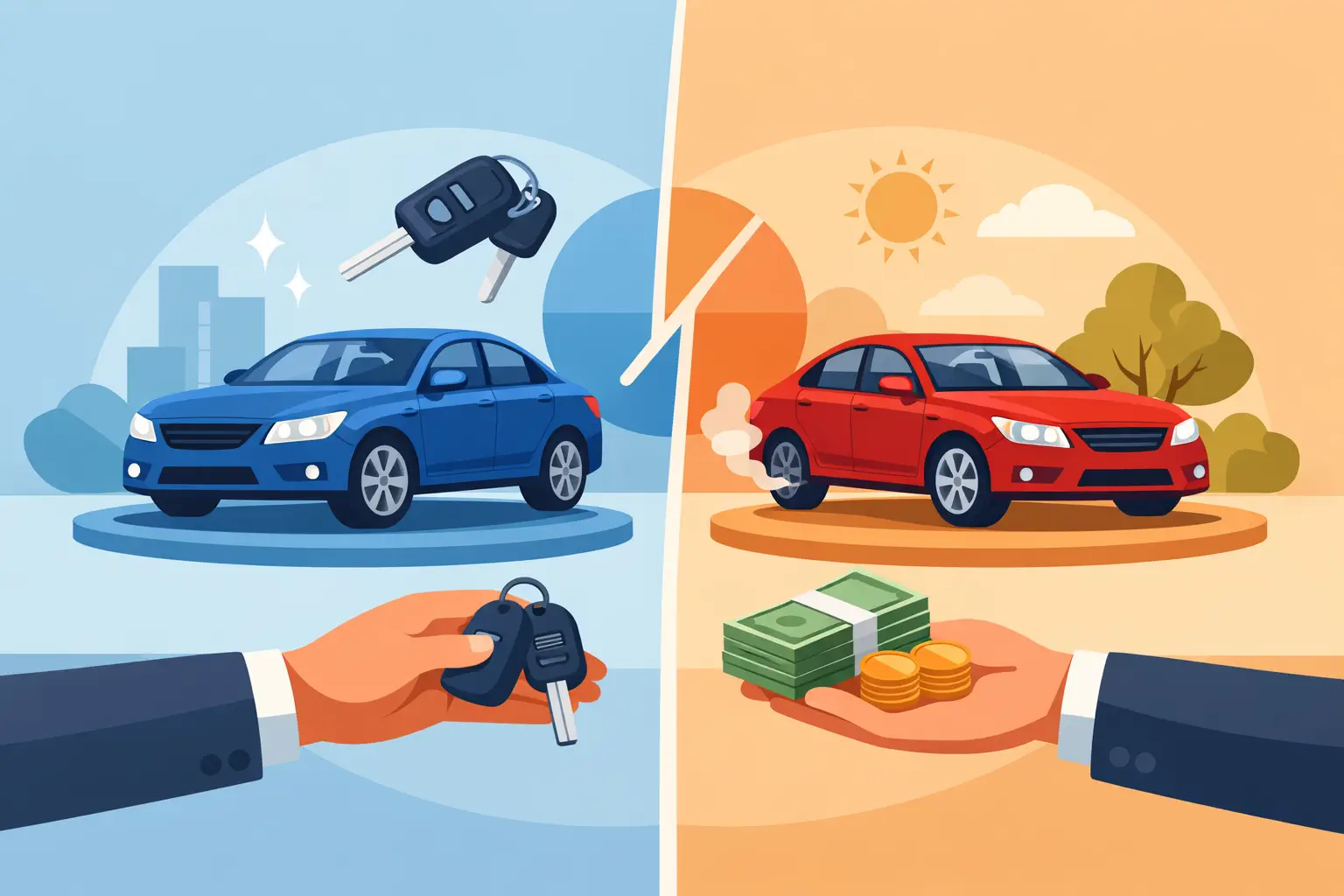
A $32,000 used SUV can cost more than a $40,000 new one if the used loan rate is higher, the warranty is nearly gone, and repairs show up six months after purchase. That is why new car versus used car is not a simple question of sticker price. It is a decision about your monthly payment, total ownership costs, risk tolerance, and how long you plan to keep the vehicle.
The right answer is rarely the vehicle a salesperson wants to move this week. It is the one that fits your actual budget without leaving you exposed to surprise costs or a deal you regret later.
New Car Versus Used Car: Start With the Full Cost
The advertised price gets attention, but it is only one part of the deal. Before comparing vehicles, look at the out-the-door price, loan terms, insurance, expected maintenance, fuel costs, taxes, registration, and any trade-in value. A lower-priced used car can be a strong value, but not if high financing costs and immediate repairs erase the savings.
Ask for a written out-the-door breakdown before you discuss monthly payments. This helps you spot added products, documentation fees, accessories, and other charges that can quietly change the math. A dealer can make almost any vehicle look affordable by stretching the loan term. That does not make it less expensive.
Also compare the cost over the period you expect to own the car. If you will trade again in three years, depreciation matters more. If you plan to drive the vehicle for eight or ten years, reliability, maintenance history, and long-term repair costs deserve more weight.
When Buying New Makes Sense
A new car offers predictability. You know its history because it has none. It comes with a full manufacturer warranty, current safety technology, and no question about whether the prior owner skipped oil changes or ignored warning lights.
For shoppers who need dependable transportation every day, that certainty can be worth paying for. A new vehicle may be the better fit if a breakdown would seriously disrupt work, child care, or a long commute. It can also make sense when manufacturer incentives are strong. Promotional financing, customer cash, or a lease offer can narrow the gap between a new model and a lightly used version.
New cars often have better available interest rates than used cars, especially for buyers with strong credit. A 1 or 2 percent difference in APR can add thousands of dollars over a long loan. Do not assume used automatically wins until you compare the actual financing offers available to you.
Still, new does not mean immune from a bad deal. New vehicles depreciate fastest in their first few years, and popular models can carry dealer markups or overpriced add-ons. A warranty is valuable, but it is not a reason to accept inflated pricing, unnecessary protection packages, or a loan that lasts longer than the car should.
New-car buyers should watch for these pressure points
The biggest traps are usually not hidden under the hood. They are in the finance office and the paperwork. Be cautious when a deal includes mandatory paint protection, nitrogen tires, security etching, prepaid maintenance, or an extended warranty presented as non-negotiable. Some products may be useful for the right buyer, but they should be optional and priced separately.
If a dealer says a payment is all that matters, bring the conversation back to the vehicle price, APR, loan length, and total amount financed. Those are the numbers that protect you.
When Buying Used Makes Sense
Used cars can offer more vehicle for the money. You may be able to afford a higher trim level, more space, or better features than you could buy new. Letting the first owner absorb the steepest depreciation is often financially smart, particularly when you choose a well-maintained vehicle that is two to five years old.
A used car is often a strong choice for budget-conscious shoppers who can pay cash or make a substantial down payment. It can also be the practical option for a teen driver, a second household vehicle, or a buyer who values low ownership costs over having the latest features.
The trade-off is uncertainty. Two identical-looking vehicles can have completely different histories. One may have been serviced on schedule and driven gently. The other may have accident damage, flood exposure, odometer issues, neglected maintenance, or an expensive problem waiting just beyond the test drive.
That is why a vehicle history report is helpful but not enough. Reports can miss damage that was never reported and cannot tell you whether a transmission is beginning to fail. A thorough pre-purchase inspection by an independent professional is one of the best ways to reduce the risk of a costly used-car mistake.
The used-car sweet spot is not always the cheapest car
The cheapest listing can become the most expensive purchase. A bargain price may reflect worn tires, overdue brakes, a weak battery, damaged suspension, or needed engine work. Those repairs can easily add thousands of dollars before the car has served its purpose.
Look for condition, maintenance records, ownership history, and a clean inspection result. Mileage matters, but how the vehicle was cared for matters just as much. A well-maintained car with 75,000 highway miles may be a safer buy than a poorly maintained car with 45,000 miles.
Certified pre-owned vehicles can provide another middle path. They may include manufacturer-backed warranty coverage and inspection standards, but certification is not a blank check. Review what the warranty covers, how long it lasts, whether there is a deductible, and whether the price premium makes sense compared with a similar non-certified vehicle.
Financing Can Change the New Car Versus Used Car Answer
Many buyers focus so hard on price that they overlook financing. This is where the new car versus used car decision can shift quickly.
New cars may qualify for lower APRs, while older used vehicles often come with higher rates and shorter maximum loan terms. On the other hand, borrowing less for a used car can still produce a lower total cost, even with a higher rate. The only reliable approach is to compare complete loan scenarios.
Get preapproved through a bank or credit union before visiting a dealer. You do not have to use that loan, but it gives you a real benchmark and prevents the dealership from framing its financing as your only option. Then compare the total interest paid, not just the payment amount.
Avoid solving affordability problems by extending a loan to 72 or 84 months. Long loans can leave you owing more than the vehicle is worth for years. If the payment only works at seven years, consider a less expensive vehicle, a larger down payment, or more time to save.
Match the Car to Your Life, Not the Sales Pitch
A new car is often best for buyers who want warranty protection, current safety features, and predictable ownership. A used car is often best for buyers who want to avoid the biggest depreciation hit and are willing to verify condition carefully.
But your personal situation should decide it. A family relying on one vehicle may reasonably choose a new or nearly new model for peace of mind. A buyer with a tight budget may be better served by a dependable used sedan with a clean inspection than by an entry-level new vehicle carrying a long loan. A busy professional may value the time saved by buying a late-model car with warranty remaining. Someone who drives very little may find that a well-kept older vehicle makes more financial sense.
Do not let features distract from fit. Check cargo space with your actual gear, test child-seat access if relevant, sit in the back seat, and drive the routes you use every week. Make sure insurance costs fit your budget before signing. The right vehicle should work on an ordinary Tuesday, not just look good under dealership lights.
Protect Yourself Before You Commit
Whether you buy new or used, slow the deal down. Review the buyer’s order line by line. Confirm the VIN, trim level, mileage, price, fees, trade value, APR, loan term, and every optional product. If something was promised verbally, get it in writing.
For used vehicles, make a sale contingent on an independent inspection whenever possible. For new vehicles, validate market pricing and review the out-the-door figures before you arrive to sign. Independent buyer-side guidance can help you question the numbers, compare alternatives, and negotiate without relying on the seller to explain what is fair.
Auto Ally Marketplace exists for that moment before commitment: when you need a clear second opinion, not another sales pitch.
The best purchase is not automatically new, used, or certified. It is the vehicle that has been checked, priced fairly, financed responsibly, and chosen with enough information that you can drive away feeling protected instead of pressured.