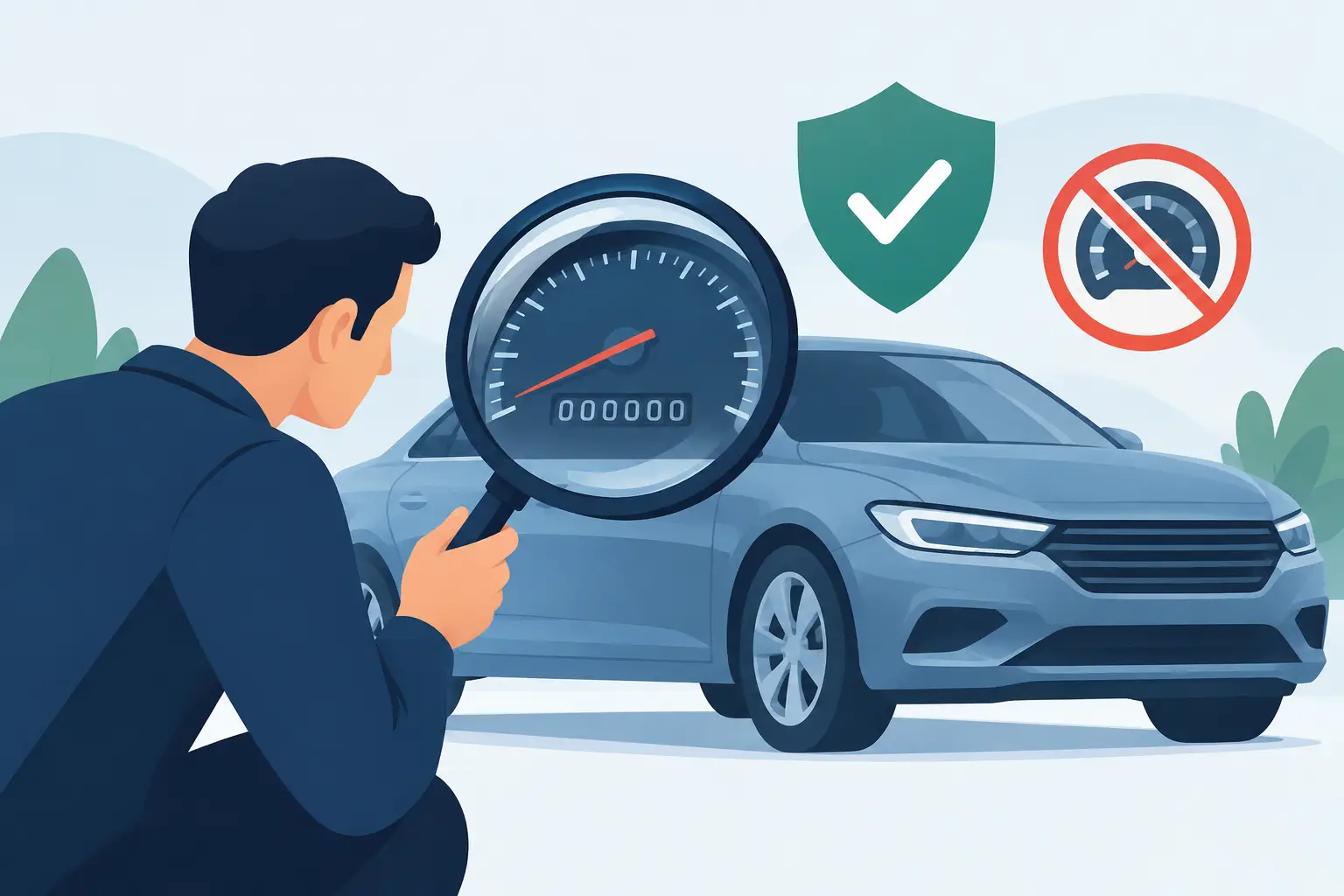
A low-mileage used car can look like a smart buy right up until the repair bills arrive. Odometer fraud detection helps you find out whether the mileage shown on the dash matches the vehicle’s real history before you agree to a price, arrange financing, or hand over a deposit.
Mileage affects much more than resale value. It shapes expected maintenance, remaining component life, warranty coverage, and whether a vehicle’s asking price is fair. When someone rolls back an odometer, they are not just changing a number. They may be charging you for years of wear the car has already lived through.
What odometer fraud looks like now
The old image of someone physically turning back a mechanical odometer is not the whole story. Most modern vehicles use digital instrument clusters, electronic control modules, and mileage records stored across different systems. That makes some tampering harder to perform, but it does not make it impossible.
A dishonest seller may alter the number displayed in the instrument cluster, replace the cluster with one showing lower mileage, or present incomplete paperwork that hides gaps in the vehicle’s history. In some cases, the dash mileage may look believable while another module, inspection record, service invoice, or title document tells a different story.
The goal is not to assume every used car has been tampered with. Most sellers are legitimate. The goal is to avoid accepting a mileage claim just because it appears on a dashboard or listing description.
Start odometer fraud detection before you negotiate
Do not wait until the final paperwork to verify mileage. By then, you may feel committed to the vehicle, emotionally invested in the deal, or pressured by a salesperson saying another buyer is interested. Check the basics early, before negotiating from a number that may be built on false information.
First, compare the vehicle identification number, or VIN, everywhere it appears. The VIN on the dashboard, driver-side door area, title, registration, service records, and vehicle-history report should match. A mismatch does not automatically prove fraud, but it is a stop sign until you get a clear explanation.
Next, review the mileage timeline rather than focusing only on the current reading. You want to see mileage increase in a logical pattern across title transfers, inspections, registrations, emissions testing, repair invoices, and maintenance visits. A record showing 92,000 miles two years ago and 61,000 miles today is an obvious problem. More subtle gaps deserve questions too, especially when a car has unusually low mileage for its age.
A vehicle-history report can be useful, but it is not a clean bill of health. These reports depend on information reported by participating sources. A missed oil change, local repair shop visit, or private transaction may never appear. Use the report to identify inconsistencies, not to replace an inspection or your own review.
Red flags that deserve a closer look
One clue by itself rarely proves odometer fraud. A low-mileage car may have belonged to a retiree, been used seasonally, or spent years as a second household vehicle. What matters is whether the car’s condition and paperwork support the mileage claim.
Watch for these warning signs when evaluating a used vehicle:
- A mileage reading that is lower than an earlier title, registration, inspection, or service record.
- Heavy wear on pedals, seat bolsters, steering wheel, shifter, buttons, or driver-side carpet that does not fit the claimed mileage.
- A replacement instrument cluster with no clear documentation showing when it was installed and what the original mileage was.
- Service stickers, maintenance invoices, or oil-change reminders showing a higher mileage than the dashboard.
- A seller who avoids direct questions, refuses an independent inspection, or rushes you to leave a deposit.
Wear can be misleading. City driving can wear a driver’s seat faster than highway miles, and a careful owner can keep a high-mileage cabin looking exceptionally clean. Treat physical condition as supporting evidence, not a verdict. Records and electronic checks carry more weight.
Why an independent inspection matters
A pre-purchase inspection is one of the strongest protections available to a used-car buyer. A qualified inspector is not there to sell you the car or defend the seller’s asking price. They are there to look for condition issues and inconsistencies that can affect your decision.
For many newer vehicles, an inspector can scan electronic modules for mileage-related data. Depending on the make, model, and available equipment, modules such as the engine control unit, transmission controller, body control module, or brake system may retain information that can be compared with the instrument cluster. Not every vehicle stores mileage the same way, and not every scan will produce a definitive answer. Still, a mismatch between systems is a serious reason to pause.
An inspection also provides context. If a seven-year-old vehicle supposedly has 24,000 miles but shows advanced brake wear, aged tires, heavily worn suspension parts, and neglected maintenance, the condition may not support the story. None of those items proves a rollback on its own. Together, they tell you whether the deal deserves deeper investigation.
This is especially valuable when buying from a private seller, an online listing, or a small independent dealer. A clean-looking vehicle and a friendly seller are not substitutes for verification.
Ask for answers in writing
If you spot an inconsistency, ask a direct question: “Can you explain why this record shows higher mileage than the odometer?” Then pay attention to both the answer and the documentation behind it.
There are legitimate explanations for certain mileage issues. An instrument cluster may have been replaced after a failure. A clerical error may have entered the wrong mileage during service or registration. A title-brand notation may reflect an accurate mileage disclosure that requires context. The difference is that a legitimate seller should be able to provide records, receipts, and a consistent explanation.
Do not accept vague reassurances such as “the report must be wrong” or “that happens all the time.” Ask for the repair invoice for the cluster replacement, the mileage recorded at installation, and any disclosure paperwork. If the seller cannot or will not provide support, walk away. There will be another car.
For dealer purchases, review the odometer disclosure and every number in the contract before signing. Confirm that the VIN, sale price, fees, mileage, and vehicle description are correct. For private-party sales, make sure the title and bill of sale accurately reflect the mileage and any disclosure required in your state. Never let urgency push you into signing incomplete paperwork.
What to do if you suspect a rollback
Stop the transaction until the issue is resolved. Do not rely on a verbal promise that it will be fixed later, and do not assume a lower price makes a questionable mileage history acceptable. A vehicle with uncertain mileage can be harder to insure, finance, resell, and maintain properly.
Save copies or screenshots of the listing, seller messages, vehicle-history report, title information, inspection findings, and repair records. If you have already purchased the vehicle and discover evidence of fraud, this documentation can help when speaking with the seller, your state motor vehicle agency, consumer-protection office, or an attorney.
If you have not purchased it yet, the best move is usually the simplest one: leave the deal. Even if the vehicle turns out not to have been altered, a seller who cannot establish a trustworthy history has not earned your money.
Buy the record, not the promise
A used car is a financial decision with consequences that last well beyond the test drive. Odometer fraud detection gives you a way to test the seller’s story against records, vehicle condition, and independent evidence instead of hoping the number on the dash is accurate.
Before you commit, give yourself permission to slow the process down. Get the VIN, review the history, arrange an independent inspection, and ask every uncomfortable question before money changes hands. Auto Ally Marketplace helps buyers approach decisions like these with more clarity and less guesswork, because a fair deal should hold up when someone checks the details.
Leave a Reply