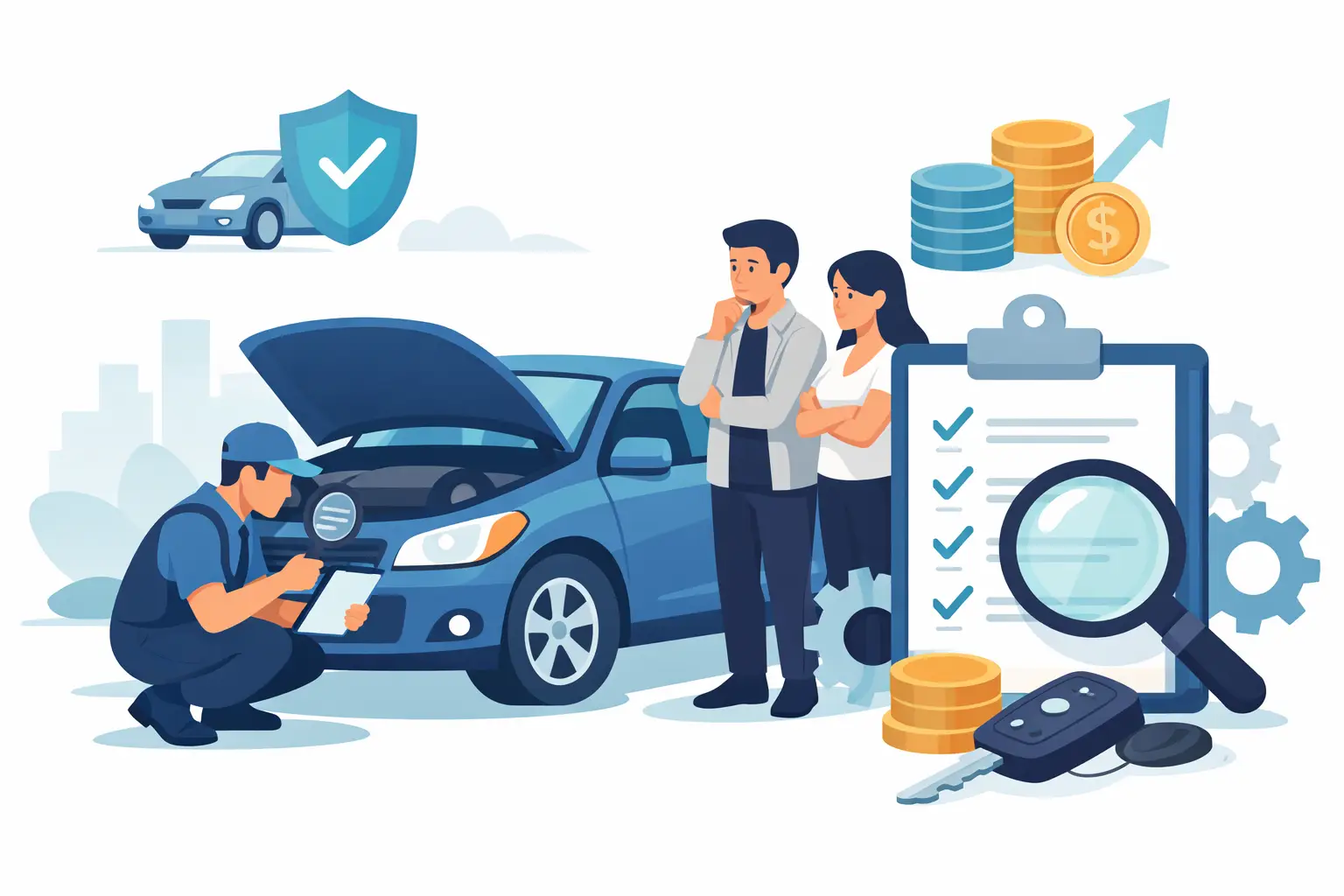
A car can look clean, drive fine for ten minutes, and still be the wrong buy. That is why pre purchase car inspection help matters so much. If you are relying on a seller’s word, a polished listing, or a quick test drive, you are making a big financial decision with only part of the picture.
The real job of a pre-purchase inspection is not just to find obvious damage. It is to protect you from expensive surprises, bad pricing, and the pressure to move fast before you have enough facts. Whether you are buying from a dealership, an independent lot, or a private seller, having an expert check the vehicle gives you leverage and clarity before you commit.
What pre purchase car inspection help actually does
Most buyers think an inspection is only about whether the engine sounds healthy or the brakes feel normal. That is part of it, but good inspection help goes further. It gives you an outside opinion from someone who is not trying to sell you the car.
A proper inspection can uncover accident repairs, fluid leaks, uneven tire wear, suspension issues, electrical problems, frame concerns, overdue maintenance, and signs the vehicle has been neglected. Just as important, it can help you understand whether those issues are minor, manageable, or deal-breaking.
That distinction matters. Not every used car needs to be perfect to be worth buying. A few worn items on an older vehicle may be expected and easily priced in. On the other hand, a car with hidden structural damage or major transmission risk can turn a decent-looking deal into a costly mistake.
Why buyers skip inspections and regret it later
A lot of shoppers know they should get an inspection, but they talk themselves out of it. Sometimes the seller says there is no need. Sometimes the deal feels urgent. Sometimes the buyer is already emotionally attached to the car and does not want bad news.
That is exactly when problems happen.
Sellers often use time pressure to keep buyers from slowing down. They might say another person is coming later, the price is only good today, or the car has already been “looked over.” None of that replaces independent verification. If a seller pushes back hard against an inspection, that is useful information by itself.
The cost of an inspection is usually small compared with the cost of getting stuck with repairs, overpaying for condition, or financing a vehicle that was a poor fit from the start. Buyers often focus on saving a couple hundred dollars up front while risking thousands later.
Pre purchase car inspection help before you say yes
The best time to get help is before you negotiate final numbers or sign anything. Once paperwork is moving, your leverage drops fast. It is much easier to walk away or renegotiate when you still have not committed.
If you are shopping at a dealership, ask whether the car can be inspected by an independent mechanic or mobile inspector. If you are buying from a private seller, arrange the inspection before handing over payment. If the vehicle is out of town, inspection coordination becomes even more valuable because you cannot easily check everything yourself.
This is also where buyers benefit from support beyond the inspection itself. A report is only useful if you know what it means for pricing, risk, and next steps. A vehicle can pass a basic safety check and still be overpriced for its condition. It can also have issues that are acceptable if the seller adjusts the price.
What a good inspection report should help you decide
The point is not to get a stack of notes and then guess what to do. Good pre purchase car inspection help should make the decision clearer.
First, it should help you answer whether the vehicle is mechanically sound enough to consider. Second, it should show you whether the condition matches the asking price. Third, it should give you a sense of what repairs or maintenance are coming soon, so you are not budgeting only for the purchase and ignoring the first six months of ownership.
That is especially important for budget-conscious buyers. A lower sticker price can be misleading if the car needs tires, brakes, suspension work, and overdue service right away. A slightly more expensive car in better condition may be the smarter financial move.
Dealership purchase versus private seller purchase
Inspection help matters in both situations, but the risks are different.
At a dealership, the biggest issue is often pricing and presentation. The vehicle may be cleaned up, marketed well, and described in reassuring terms, but that does not guarantee strong condition or fair value. Some dealerships recondition thoroughly. Others do the minimum needed to get a car front-line ready. The paperwork can also move quickly, which leaves buyers less time to think.
With private sellers, pricing can be better, but transparency varies a lot. Some owners are honest and organized. Others leave out accident history, maintenance gaps, or warning signs they hope you will not notice. There is usually less process and fewer safeguards, so your own due diligence matters even more.
In either case, independent inspection help gives you a cleaner read on the vehicle because the person evaluating it is not the one trying to close the deal.
What happens if the inspection finds problems
This is where many buyers freeze. They assume a bad report means the car is dead to them, or they ignore the report because they do not want to start over.
The better approach is to treat the findings as decision tools.
Some issues should push you to walk away. Serious frame damage, flood indicators, major drivetrain symptoms, or signs of poor prior repairs can make the risk too high. Other findings create room to renegotiate. If the car needs tires soon, has fluid seepage, or shows deferred maintenance, you may still move forward if the price changes enough to reflect the real condition.
It depends on the vehicle, the budget, and your tolerance for repairs. A buyer who needs reliable daily transportation with little room for surprise should be more conservative than a buyer who understands older vehicles and has money set aside for maintenance.
Inspection help is really buying strategy
This is the part people miss. An inspection is not just a mechanical checkpoint. It is part of a smarter buying strategy.
When you know the true condition of the car, you are harder to pressure. You can negotiate from facts instead of emotion. You can compare one vehicle against another more honestly. You can stop focusing only on monthly payment and start looking at total ownership cost.
That shift matters because sellers often want the conversation centered on speed and payment. Buyers need the conversation centered on value, condition, and risk. Those are not the same thing.
For many shoppers, the most useful support is not just getting an inspection scheduled. It is getting help interpreting the findings, validating the deal, and deciding whether to move forward, negotiate, or walk. That is where a buyer-side marketplace like Auto Ally Marketplace can make the process feel a lot less murky.
How to use inspection results without getting overwhelmed
If the report comes back with several notes, do not panic. Used cars almost always have something on them. Focus on three questions.
Are the issues safety-related or major mechanical concerns? Are the problems immediate or just things to monitor? Does the price still make sense after factoring in repairs and maintenance?
Those answers cut through a lot of noise. They also help you avoid two common mistakes: walking away from a solid car over normal wear, or buying a problem car because the seller called the issues minor.
The smartest buyers stay flexible. They do not force a deal just because they spent time shopping. They do not let a clean exterior or friendly salesperson replace actual verification. And they do not assume every concern is a deal-breaker without looking at the numbers.
A used car purchase does not need to feel like a gamble. When you get the right inspection help before you commit, you give yourself a fair shot at buying the right vehicle for the right reasons. That is how you move forward with more confidence and a lot less chance of getting played.