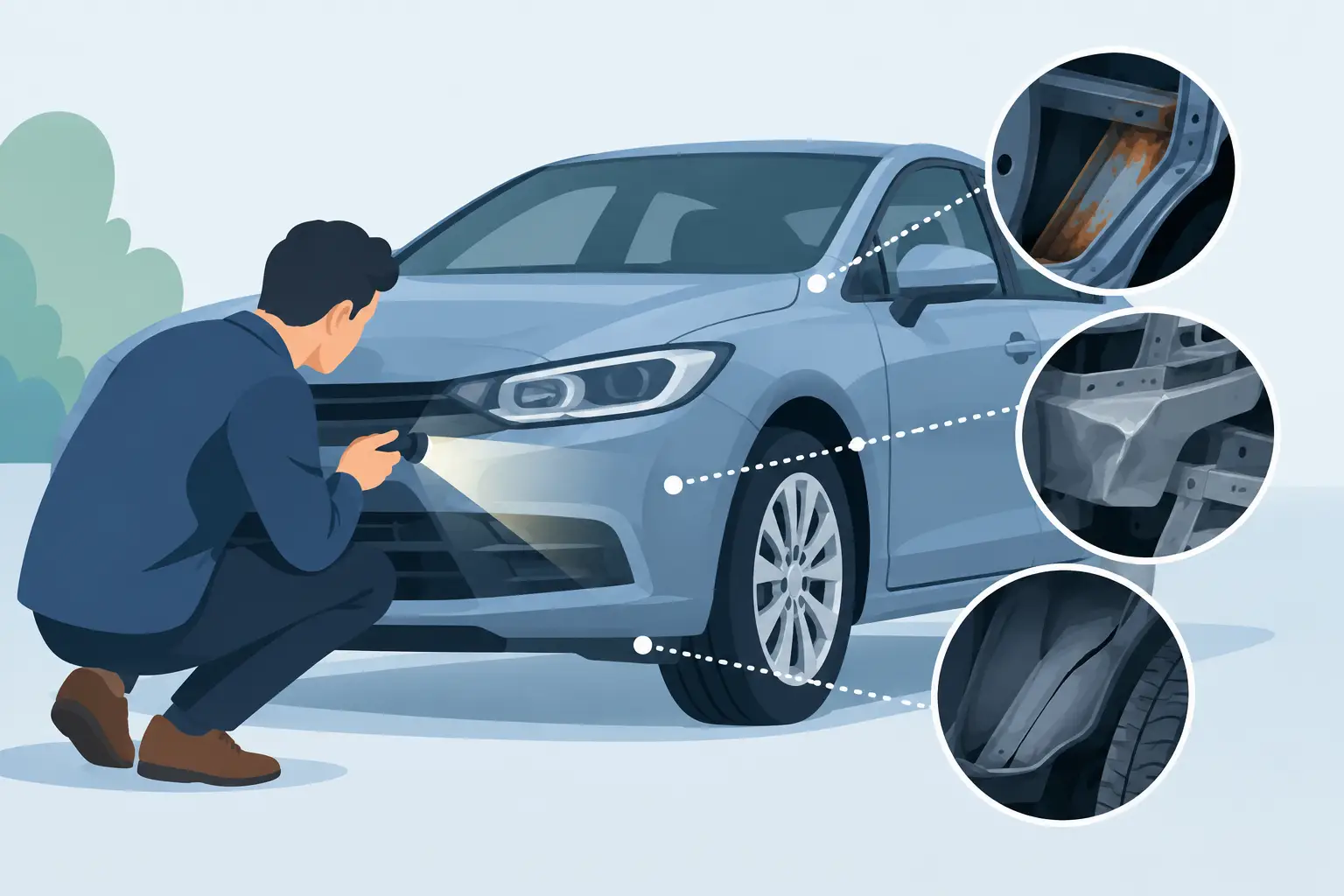
A clean history report and a freshly detailed exterior can make a used car look like a safe bet. But an unseen accident damage example can sit behind the bumper cover, under the trunk carpet, or inside a wheel well – places most shoppers never think to inspect before signing.
That matters because accident repairs vary widely. A properly repaired minor collision may not be a deal-breaker. A vehicle with poor structural repairs, hidden water intrusion, or mismatched safety components can become an expensive problem long after the sale. The goal is not to reject every car that has ever been damaged. It is to know what happened, how it was repaired, and whether the price reflects the risk.
An unseen accident damage example: damage behind a perfect bumper
Picture a three-year-old SUV listed at an attractive price. The paint shines, the panel gaps around the hood look normal, and the vehicle history report shows no accident. During a test drive, it tracks straight and feels quiet. For a busy shopper, this is often the point where the deal feels done.
Then an independent inspector removes a few accessible fasteners beneath the front bumper cover and sees fresh-looking clips beside older, dirtier hardware. Behind the cover, the energy absorber has a crack, one headlight mounting tab has been repaired with adhesive, and the radiator support has a small bend. None of it is obvious from the parking lot.
This is a realistic unseen accident damage example because the visible bumper cover may have been replaced or refinished while damage behind it received only partial repair. The SUV might still be drivable. It might even pass a casual look-over. But the buyer needs answers before moving forward: Was the impact limited to the front cover? Were cooling components checked? Did the repair affect the headlight aim, parking sensors, or advanced driver-assistance systems? Is there documentation for the repair?
The right answer may be to walk away. It may also be to renegotiate if a qualified inspection confirms the issue is minor and the seller can document a proper repair. The point is that a glossy finish is not proof of a clean vehicle.
Why hidden damage is easy to miss
A vehicle can hide collision evidence without anyone deliberately trying to deceive you. Prior repairs may have been done years ago, a previous owner may not have known the full history, or an insurance claim may never have been reported. Vehicle history reports are useful screening tools, not guarantees. They rely on information that was reported to participating sources.
Modern cars also make visual checks harder. Bumper covers, underbody shields, insulation panels, and trim hide the structural and mechanical areas a collision can affect. Repair shops can blend paint well enough that a color difference is nearly impossible to see in a dealership lot. Detail work can make an older vehicle feel newer than it is.
There is also a major difference between cosmetic repair and safety-related repair. Replacing a scratched bumper cover is one thing. Damage to a unibody rail, suspension mounting point, airbag sensor, radiator support, or wiring harness deserves a much closer look. A buyer should not be expected to diagnose those issues with a flashlight and ten minutes in a parking space.
Clues that deserve a closer inspection
You do not need to become a body-shop technician to notice signs that warrant questions. Start by viewing the car in daylight, ideally when it is dry and clean but not freshly soaked in tire shine. Walk around it slowly and compare one side with the other.
Look for uneven panel gaps around the hood, doors, liftgate, and headlights. A gap that narrows or widens noticeably can point to a replaced panel or an alignment issue. Check whether the paint texture and color appear consistent from panel to panel. Slight variations can occur even with quality work, especially on metallic colors, so this is a clue rather than a verdict.
Open the hood and inspect the bolts holding the fenders, hood hinges, and headlights. Tool marks, chipped paint around bolt heads, or hardware that looks newer than surrounding parts can suggest prior work. Under the hood, look for warning labels that are missing, wrinkled, or painted over. In the trunk, lift the cargo floor and check for ripples, fresh seam sealer, water stains, or a spare-tire well that does not look factory-finished.
Pay attention on the test drive, too. A car that pulls, vibrates at highway speed, makes a clunk over bumps, or has an off-center steering wheel needs evaluation. Those symptoms can come from ordinary wear, tires, or a simple alignment. They can also signal collision-related suspension or frame concerns. It depends on the vehicle and the evidence, which is why guessing is a bad strategy.
Other red flags are not always visible. Warning lights that briefly illuminate and disappear, malfunctioning parking sensors, a backup camera that sits crookedly, or driver-assistance features that behave inconsistently can indicate incomplete repairs or missed recalibration. On newer vehicles, sensors and cameras often need professional calibration after even modest front- or rear-end work.
Ask the seller questions that produce real answers
A vague question such as “Has it been in an accident?” can produce a vague answer. Be direct and specific: “Do you know of any body, frame, airbag, or paint repairs?” Ask whether they have invoices, insurance estimates, repair photos, or receipts from the shop that completed the work.
If the seller says the vehicle had “just a small bump,” ask what was replaced. A bumper cover, headlight, grille, radiator support, wheel, or airbag are not interchangeable details. Each tells you something different about the possible impact. Ask whether any safety systems were recalibrated and whether there are any open recalls or unresolved warning lights.
A dealer should be able to explain what it knows about the vehicle’s condition and prior reconditioning. A private seller may have less documentation, especially if the damage happened before they owned it. Either way, missing records should make you more careful, not more willing to accept a reassuring story.
Put a pre-purchase inspection between you and the risk
The smartest move is to make an independent pre-purchase inspection a condition of your offer. A qualified inspector can assess areas that are difficult for a typical buyer to evaluate, including underbody damage, suspension wear, fluid leaks, trouble codes, tire condition, and visible repair quality. They can also identify when a body-shop evaluation or more advanced measurement is needed.
A pre-purchase inspection is not an x-ray. It cannot reveal every concealed repair without disassembly, and no inspector can promise that a vehicle will never need repairs. But it changes the decision from a guess based on appearance to one based on evidence. For a higher-priced vehicle, a late-model car with driver-assistance technology, or any vehicle with questionable history, that information can save far more than the inspection costs.
If an inspection finds accident-related concerns, do not let the pressure of a “great deal” rush you. Request documentation, get a repair estimate when appropriate, and compare the car against other available options. A discount only helps if it is large enough to cover the real risk and you are comfortable owning that risk.
When repaired accident damage may be acceptable
Not every repaired vehicle belongs on your no-buy list. A low-speed cosmetic claim with clear records, quality workmanship, and no structural or safety-system concerns may be perfectly reasonable. In some cases, it can offer value because buyers often avoid any vehicle with an accident record, even when the repair was straightforward.
The trade-off is resale value and uncertainty. You may pay less now, but you may also receive less when you sell or trade it later. Financing and insurance considerations can vary as well, particularly when a vehicle has a branded title. A clean title does not automatically mean clean condition, and a repair record does not automatically mean a bad car. Evidence is what separates a smart value buy from a costly compromise.
Before you commit, give yourself permission to slow the deal down. The right vehicle will hold up to questions, documentation, and an independent inspection. If it will not, your best protection is to keep shopping and move forward with more confidence and less guesswork.