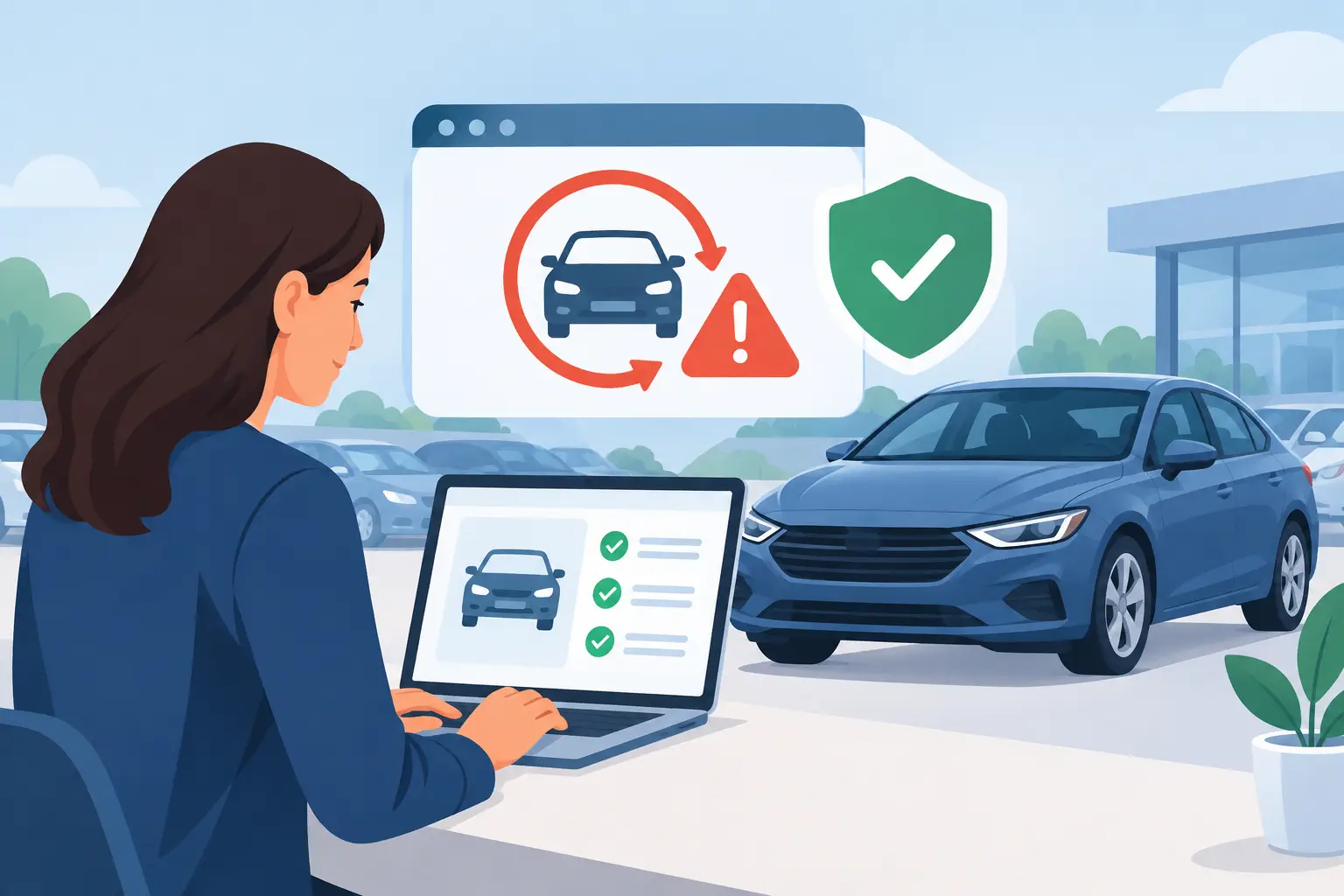
A clean-looking car can still have an unresolved safety problem. That is why you should verify vehicle recall status before you agree on a price, hand over a deposit, or sign financing paperwork. A recall may involve airbags, brakes, fuel systems, steering, child-seat anchors, electrical wiring, or software that affects how the vehicle operates. Some repairs are quick. Others can affect whether the car is safe to drive home.
A recall check is free, fast, and one of the easiest ways to protect yourself from buying a problem you did not create. But the result only helps if you know what it means, what to ask next, and when an open recall should change your plans.
How to Verify Vehicle Recall Status With the VIN
The most reliable way to check a specific vehicle is by using its 17-character Vehicle Identification Number, commonly called the VIN. This number identifies the exact vehicle, not just the year, make, and model. Two similar-looking SUVs can have different recall histories based on their production date, factory, equipment, or prior repair status.
Ask the seller for the VIN before you visit whenever possible. A legitimate seller should be able to provide it without hesitation. You can usually find it on the lower corner of the driver-side windshield, on the driver-side door jamb, on the title, registration, insurance card, or vehicle history documents.
Enter the VIN into the federal recall lookup tool maintained by the National Highway Traffic Safety Administration, or check the manufacturer’s recall lookup system. Both sources can show whether the vehicle has an open safety recall that has not been completed.
Do not rely only on a general search for recalls affecting that make and model. That can tell you whether a vehicle line had known issues, but it cannot confirm whether the exact car in front of you is included or whether the repair was completed.
What a VIN recall search can tell you
A VIN-based search may show an open recall, the component involved, the safety risk, and the remedy the manufacturer has authorized. It may also show that there are no unrepaired recalls currently reported for that vehicle.
That wording matters. “No open recalls” is good news, but it is not a complete mechanical clearance. It does not guarantee the car has never been in an accident, has no worn-out parts, or will not develop problems. It simply means the search did not identify an outstanding safety recall for that VIN at that time.
Also, recall data can take time to update. If a recall was announced very recently or a repair was performed within the last few days, verify the information with the manufacturer or an authorized dealer.
What an Open Vehicle Recall Means for a Buyer
An open recall means the manufacturer has identified a safety-related defect or a failure to meet a federal safety standard and has not recorded the approved remedy as completed for that VIN. The repair is generally performed at no cost to the owner, even if the vehicle is out of warranty or has changed hands multiple times.
The word “recall” does not automatically mean the car is unusable. Some recalls involve a software update or a part that can be replaced in a short appointment. Others may come with warnings such as parking the vehicle outside, avoiding the passenger seat, limiting driving, or not driving the vehicle at all until repaired.
Read the recall description instead of making assumptions. An airbag inflator recall, for example, deserves a different level of urgency than a minor calibration update. If the notice includes a “do not drive” or “park outside” warning, treat it as a stop sign, not a negotiating detail.
A seller may say, “The dealer will fix it for free.” That may be true, but it does not answer the practical questions: Is the repair part available? Is the vehicle safe to drive before the appointment? How long is the wait? Will you have transportation while it is being repaired? Get clear answers before you commit.
Ask These Questions Before You Make an Offer
If a recall appears, ask the seller whether the repair has already been scheduled and request documentation if they claim it was completed. A repair invoice from an authorized dealer is stronger than a verbal promise. If the VIN search still shows the recall as open after the seller provides paperwork, contact the servicing dealer or manufacturer to confirm the record.
You should also ask whether replacement parts are available now. Some recalls have long wait times because parts are limited. A free repair is less reassuring if you are expected to drive the vehicle for months while waiting for a critical component.
For a dealership purchase, put any agreement about the recall in writing. If the dealer agrees to complete the repair before delivery, the buyer’s order or addendum should say so. Do not accept vague language such as “will address” or “customer aware of recall.” It should identify the recall and state who is responsible for completing it.
For a private-party sale, the situation requires even more caution. Private sellers are not always equipped to arrange transportation, provide a loaner, or wait through a parts delay. You may still decide the car is worth buying, but factor the time, inconvenience, and safety risk into your decision and price.
A Recall Is Not the Same as a Service Bulletin
Car shoppers often hear terms that sound similar but mean different things. A safety recall is a manufacturer action tied to a safety defect or federal compliance issue. The remedy is generally free.
A technical service bulletin, often called a TSB, is different. It tells dealer technicians how to diagnose or repair a known issue. It may relate to a real problem, but it is not necessarily a safety recall, and the repair may not be free if the vehicle is outside warranty.
There are also manufacturer service campaigns and customer satisfaction programs. These can cover certain repairs for a limited period, but they do not carry the same obligations as a safety recall. If a vehicle has a pattern of TSBs or complaints, that is worth discussing during a pre-purchase inspection, even if the recall search comes back clean.
Do Not Let a Recall Check Replace an Inspection
A recall lookup is one layer of protection. It should sit alongside a vehicle history review, a careful test drive, pricing research, and an independent pre-purchase inspection. Each tool catches different risks.
A recall database will not tell you whether the transmission shifts poorly, the tires are unsafe, the suspension is worn, or the vehicle has hidden collision damage. It will not reveal whether the seller added thousands in questionable fees or priced the car above its real market value.
This is where buyers get played: they find one reassuring data point and stop asking questions. A clean vehicle history report is not enough. A passed inspection is not enough. No open recalls is not enough. Put the full picture together before you sign.
If you are buying from a dealer, keep your leverage by checking recalls before negotiating final numbers. Once you have invested hours at the showroom, accepted a trade-in figure, or started credit paperwork, it becomes harder to walk away. Auto Ally Marketplace helps shoppers bring more clarity to that stage by connecting them with buyer-side support before a deal becomes a commitment.
When Should You Walk Away?
Walking away may be the right move when the recall carries a serious driving warning, parts are unavailable for an unknown period, the seller refuses to share the VIN, or the seller minimizes a safety concern without documentation. You should also be cautious if the vehicle has multiple open recalls plus poor maintenance records, obvious condition issues, or a price that does not leave room for the inconvenience.
On the other hand, an open recall does not automatically make a vehicle a bad purchase. If the repair is available, the dealer will complete it before delivery, the car passes an independent inspection, and the price is fair, moving forward can be reasonable. The point is not to fear every recall. The point is to make the decision with your eyes open.
Before you let excitement, pressure, or a “today only” offer take over, verify the VIN, read the recall details, and ask for proof. The right car can wait long enough for you to make a smart decision.