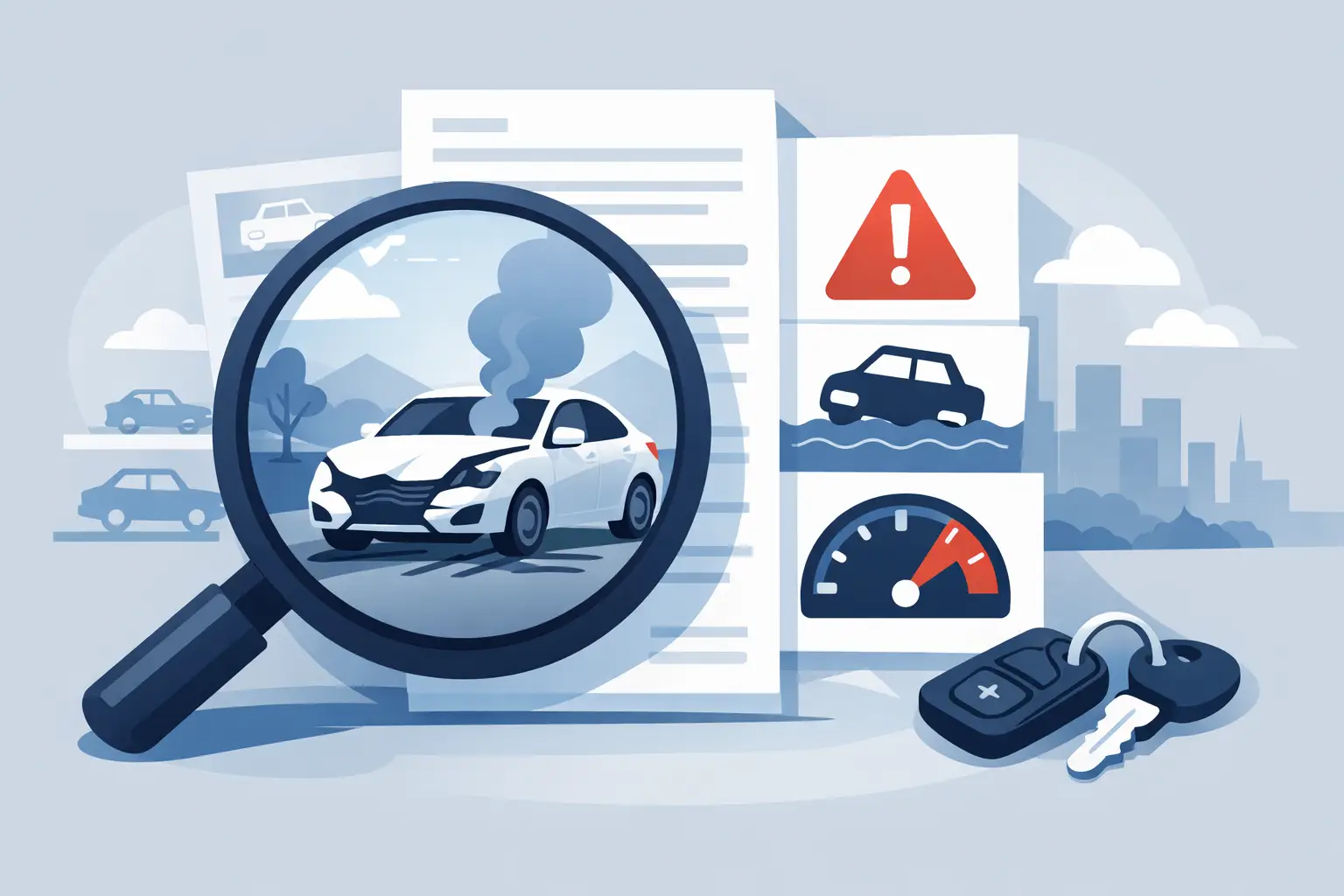
A vehicle can look spotless on the lot, drive quietly around the block, and still carry a past that changes what it is worth. That is why warning signs in vehicle history deserve your full attention before you discuss payments, trade-ins, or add-ons. A history report will not tell you everything, but it can give you the questions that protect you from buying someone else’s expensive problem.
The goal is not to reject every used car with a record. Many vehicles have minor repairs, normal ownership changes, or an isolated incident that was properly addressed. The goal is to understand the story behind the VIN, make sure the price reflects that story, and walk away when the seller cannot give straight answers.
Start With the VIN, Not the Sales Pitch
Ask for the vehicle identification number early, ideally before you visit the seller. Use it to review a reputable vehicle history report and compare the report with the listing, window sticker, and seller’s description. If the ad says one owner but the report shows multiple owners, or says no accidents while the report lists damage, pause the conversation.
A report is a screening tool, not a guarantee. Some crashes are never reported to insurers or government agencies. Repair shops do not all submit the same data. Records can also take time to appear. That means a clean report is not proof that a car has never been damaged, while a report showing damage is a reason to investigate rather than panic.
The seller’s reaction matters, too. A reliable seller should be willing to provide the VIN, explain known issues, and allow an independent pre-purchase inspection. Pressure to skip those steps is a warning sign of its own.
The Biggest Warning Signs in Vehicle History
Salvage, rebuilt, flood, or lemon branding
A branded title is one of the clearest signals that a vehicle needs extra scrutiny. A salvage title generally means an insurer declared the car a total loss after collision, theft, flood, fire, or another major event. A rebuilt title means it was repaired and approved for road use after being branded salvage. It may be legal to drive, but that does not make it equivalent to a clean-title vehicle.
The trade-off is price. A properly repaired rebuilt vehicle can cost less than a comparable clean-title car, but financing, insurance coverage, resale value, and future trade-in offers may all be more difficult. Flood history deserves particular caution because water damage can create electrical and corrosion problems months or years later. If you are considering a branded-title vehicle, get documentation for the repairs and use a qualified independent inspector who knows how to look for structural and water damage.
Lemon-law or manufacturer buyback records also require context. The issue may have been fixed under warranty, but you should know exactly what failed, how often it was repaired, and whether the fix has held up. Do not accept a vague answer such as “it was just a minor recall.”
Odometer inconsistencies
Mileage is one of the biggest drivers of used-car value, so an odometer discrepancy should never be brushed aside. Watch for mileage that drops between records, a title entry marked not actual mileage, or long gaps that do not make sense for the vehicle’s age and use.
Sometimes an inconsistency has an innocent explanation, such as a data-entry mistake or a replaced instrument cluster that was documented correctly. Sometimes it points to odometer tampering. Either way, the seller needs to provide records that resolve the discrepancy. Without a convincing explanation, assume the vehicle may have more wear than its displayed mileage suggests and move on.
Accident and damage records that do not match the car
An accident entry does not automatically mean you should walk away. A low-speed bumper repair is different from structural damage, airbag deployment, or a collision involving multiple panels. What matters is the severity, the quality of repairs, and whether the seller is transparent.
Look closely when a report shows repeated damage events, major collision damage, or an accident shortly before the vehicle was listed for sale. During an in-person inspection, check for uneven panel gaps, mismatched paint, overspray, moisture inside lights, warning lights, tire wear that is uneven, and doors or trunk lids that do not close smoothly. These are not final proof of poor repairs, but they are reasons for a professional inspection.
Be especially careful if the report notes damage but the seller insists the car has never been in an accident. They may be using narrow language, but you should not have to decode the answer. Ask what happened, where it was repaired, and whether invoices or photos are available.
Frequent ownership changes or a confusing timeline
Several owners are not inherently bad. A commuter car, leased vehicle, or older vehicle may simply have changed hands over time. But fast turnover can signal an unresolved problem, particularly when a vehicle passes through multiple owners or dealers in a short period.
Look at the timeline as a whole. Was the car titled, sold, and retitled repeatedly within months? Did it move between distant states unusually often? Was it registered for only a short time after a major repair? None of these facts proves misconduct, but together they can suggest a car that buyers keep deciding not to keep.
Also check whether the stated ownership type matches the listing. Former rentals and fleet vehicles can be well maintained, but they also may have experienced harder daily use than a similar privately owned vehicle. Their price should account for that history.
Lien records, title issues, and missing paperwork
A seller who cannot produce a clear path to ownership can turn a simple purchase into a serious headache. A reported lien, title issue, or missing title does not always mean fraud. A loan may simply need to be paid off as part of the sale. Still, do not hand over money based on a promise that the paperwork will be sorted out later.
If a lien exists, make sure there is a clear, verifiable plan for it to be released and that you understand how title transfer will happen in your state. With a private sale, be particularly cautious about a seller whose name does not match the title or who says they are selling the car for a friend. Legitimate explanations exist, but the risk is yours if the ownership chain is not clean.
Service History Can Be Reassuring, but Gaps Matter
Consistent maintenance records are a good sign because they show the vehicle was likely cared for. Oil changes, tire rotations, brake service, and manufacturer-recommended maintenance create a more believable ownership story. But do not confuse a long list of service entries with a perfect vehicle.
A sparse service history may simply mean the owner used a shop that does not report records. It becomes more concerning when paired with high mileage, a neglected interior, overdue dashboard alerts, or a seller who cannot explain basic maintenance. For vehicles with timing belts, hybrid batteries, diesel emissions systems, or known transmission concerns, ask whether major scheduled work has been completed. The answer can affect the real cost of ownership immediately after purchase.
Open recalls are another item to check. A recall does not make a vehicle unsafe by default, but unresolved safety recalls should be addressed promptly. Ask whether the repair has been completed and confirm that the vehicle is eligible for the remedy.
Match the Report to a Real Inspection and Test Drive
Vehicle history tells you where to look. An inspection tells you what is true now. Before signing, arrange an independent pre-purchase inspection with a qualified mechanic or inspection professional. They can identify leaks, frame concerns, suspension wear, battery health, diagnostic trouble codes, and repair quality that a history report cannot confirm.
During the test drive, use more than five minutes around the block. Start the car cold if possible. Drive it at city and highway speeds. Test the brakes, steering, transmission shifts, climate control, cameras, windows, and electronics. Pay attention to warning lights that appear briefly and disappear, unusual vibrations, burning smells, and sounds over bumps.
If a dealer or private seller will not allow a reasonable independent inspection, you have learned something valuable before spending your money. Auto Ally Marketplace can help buyers coordinate practical pre-purchase support when they want a second opinion before committing.
Let the History Change the Deal, Not Just the Decision
A history issue should affect more than whether you buy. It should affect what you are willing to pay. A prior accident, branded title, heavy fleet use, missing records, or unresolved recall can reduce market value and increase future ownership risk. Compare the asking price against similar vehicles with clean, well-documented histories, not just against the seller’s preferred number.
Be ready to walk away if the details do not add up. There will be another vehicle. The money you save by avoiding one hidden problem can cover a lot of test drives, inspections, and time spent searching.
The strongest position in any car deal is simple: you are willing to buy the right vehicle, but you are not willing to buy it blind. Ask for the VIN, read the record carefully, verify the condition independently, and let the facts set the terms.