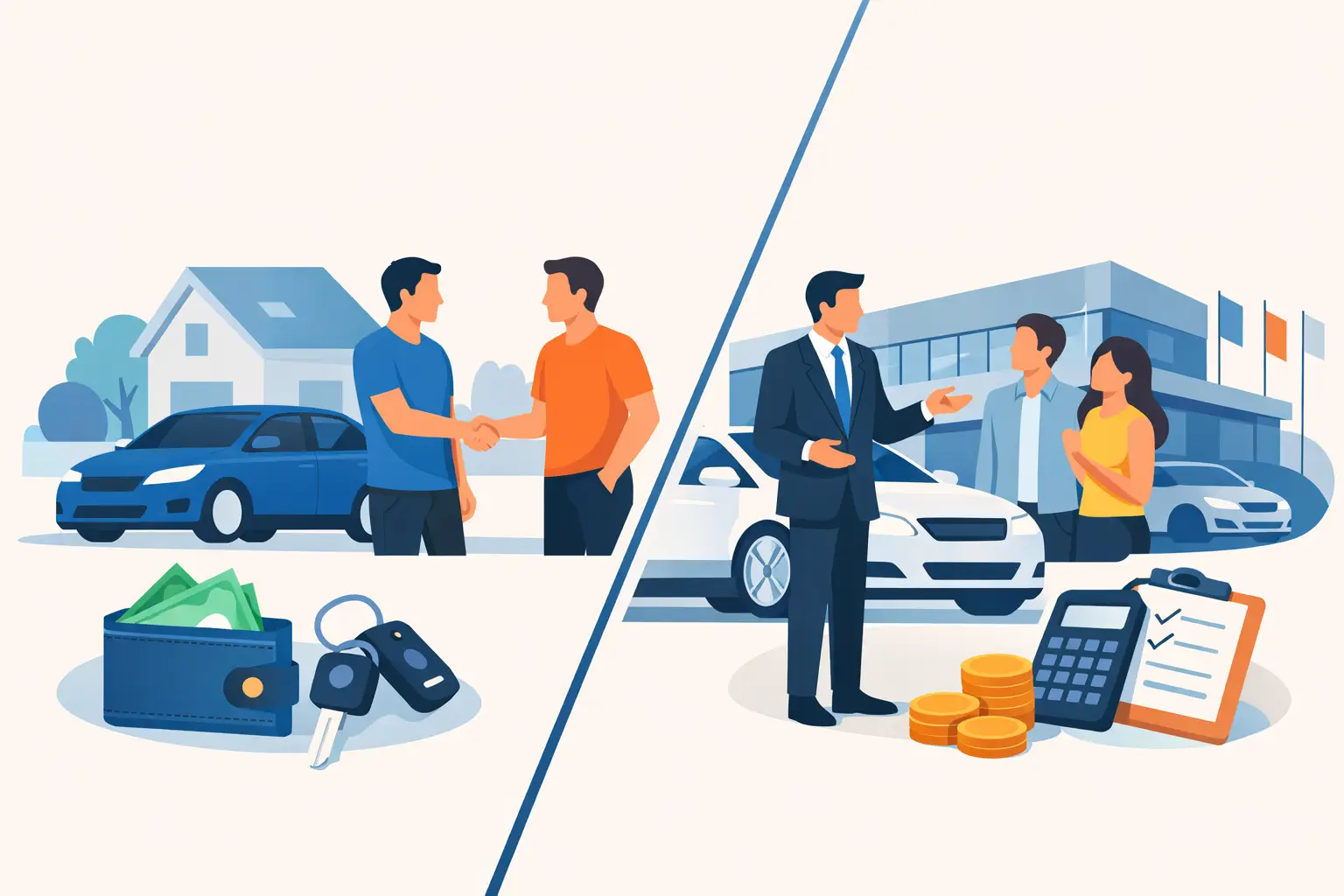
A low asking price can feel like a win until the first repair bill, title problem, or financing surprise lands in your lap. The private seller vs dealership decision is not simply about who has the cheaper car. It is about deciding which trade-offs you can afford, which risks you can verify, and how much protection you want after the sale.
For some buyers, a private-party purchase is the smartest route to a clean, well-kept vehicle at a fair price. For others, a dealership’s financing options, legal obligations, and available warranty coverage are worth paying more for. The right answer depends on the specific vehicle and the strength of the deal, not the sign over the parking lot.
Private Seller vs Dealership: The Real Differences
A private seller is usually an individual selling a vehicle they own. There is often less overhead, fewer sales steps, and more room to talk directly about how the car was used and maintained. But there is also less structure. You are responsible for checking the title, confirming the seller’s identity, arranging payment, handling registration, and finding problems before money changes hands.
A dealership is a licensed business that sells vehicles, usually with formal paperwork, financing departments, trade-in options, and some level of inspection or reconditioning. That structure can make the transaction easier, but it does not automatically make every vehicle or every price fair. Dealers can add documentation fees, protection products, financing markups, and accessories that raise the final number well above the advertised price.
The key difference is where the burden sits. With a private seller, more of the burden is on you to investigate. With a dealership, you need to investigate the deal itself, including the out-the-door price and every line item in the contract.
When Buying From a Private Seller Makes Sense
Private-party vehicles often cost less than comparable dealership listings. The seller is not paying for a showroom, sales staff, advertising, or reconditioning department, so they may be willing to accept a lower price. You also avoid many dealership-added charges, although you will still owe sales tax and registration costs in most states when you title the vehicle.
A private seller can be especially appealing when you are shopping for an older used vehicle, paying cash, or looking for a specific model with a documented maintenance history. A careful owner who has service records, a clean title, and straightforward answers can give you a clearer picture than a generic dealer listing ever will.
There is often more honest context available, too. You can ask why the seller is letting the car go, where it was serviced, whether it has ever been in an accident, and what they would fix if they were keeping it. Their answers are not proof, but evasive answers are useful information.
The risk is that most private sales are effectively as-is. If the transmission fails the next day or an undisclosed issue appears after purchase, your options may be limited. A seller who says, “It runs great,” is not providing a warranty. That is why a low price only matters after you know the vehicle’s actual condition.
Private-party red flags that should stop the deal
Walk away if the seller cannot produce a title in their own name, pressures you to pay before you inspect the vehicle, refuses a pre-purchase inspection, or wants to meet somewhere that prevents you from checking the car properly. Be cautious when the price is dramatically below market value, the vehicle identification number does not match the title, or the seller asks for unusual payment methods.
A legitimate seller should expect reasonable questions. They may not know every detail, but they should be willing to let you verify the basics.
When a Dealership Is the Better Choice
A dealership can be a better fit when you need financing, want to trade in your current vehicle, or value a more standardized purchase process. Dealers generally handle title and registration paperwork, and many offer certified or warranty-backed vehicles. That can reduce friction, especially for busy buyers and first-time shoppers.
Dealer inventory also gives you more choices in one place. You may be able to compare several similar vehicles, test-drive them back-to-back, and negotiate based on real alternatives. If you are replacing a family vehicle quickly, that convenience has real value.
Still, do not confuse convenience with protection. A used car described as “inspected” may have received a basic safety check, not an exhaustive mechanical review. A certified pre-owned program can provide meaningful benefits, but read what it actually covers, how long coverage lasts, and what deductible applies. The words on the window are not the whole story.
Dealership financing deserves the same scrutiny. You can often negotiate the vehicle price, trade-in value, financing rate, and add-on products separately. Focusing only on the monthly payment makes it easier for a dealer to stretch the loan term or bury extra products in the deal. Ask for the out-the-door price in writing before discussing how you plan to pay.
Compare the Total Cost, Not the Sticker Price
The cheapest listing is not always the least expensive car to own. Compare both options using the same standard: what will you pay to get a dependable vehicle titled, insured, and ready to drive?
For a private sale, factor in the agreed price, sales tax, title and registration charges, immediate maintenance, tires, brakes, a battery, and the cost of a pre-purchase inspection. If the car needs work soon, price that work before negotiating, not after you own it.
For a dealership purchase, start with the selling price and request a complete buyer’s order. Look for taxes, title and registration charges, documentation fees, dealer-installed accessories, service contracts, GAP coverage, and other optional products. Some fees are unavoidable; many products are negotiable or can be declined. Your goal is not to argue over every dollar. It is to know exactly what you are agreeing to pay.
Also compare financing honestly. A dealer may advertise a lower vehicle price but offer a higher interest rate. A private seller may require cash or outside financing, which can limit your options but keep the transaction cleaner. Get preapproved through a bank or credit union when possible, then compare that offer against dealer financing line by line.
How to Protect Yourself in Either Purchase
Whether you buy from a driveway or a dealership, do not skip your own verification. A vehicle history report can reveal title brands, reported accidents, odometer concerns, and ownership history, but it cannot tell you whether the engine has a developing problem. That is where an independent inspection matters.
Before committing, take these four steps:
- Confirm the VIN on the vehicle matches the title, listing, and history report.
- Have a qualified independent mechanic inspect the vehicle, including a road test and scan for trouble codes.
- Research fair market pricing for the exact year, trim, mileage, condition, and local market.
- Review every document before paying or signing, including payoff details if there is an existing loan.
For a private sale with a lien, do not rely on a promise that the seller will pay it off later. Work with the lender to understand the payoff process and when the clean title will be released. For a dealership sale, do not sign a worksheet that leaves numbers blank or accept a verbal promise that is missing from the paperwork.
This is where buyer-side guidance can change the outcome. Auto Ally Marketplace can help shoppers coordinate inspections, validate pricing, review deal terms, and get a second opinion before a rushed decision becomes an expensive problem.
Which Option Is Right for You?
Choose a private seller when the vehicle has a clean, verifiable history, the seller is transparent, an independent inspection checks out, and the price leaves room for expected maintenance. It can be a strong value play, particularly if you have cash or financing already arranged and are comfortable handling the paperwork.
Choose a dealership when you need financing flexibility, a trade-in, warranty coverage, or a faster, more structured transaction. It may also be the safer choice when you are less comfortable evaluating titles, vehicle condition, or private-party payment logistics. Just keep your guard up on add-ons and insist on an out-the-door number.
The best car deal is not the one that sounds easiest in an ad. It is the one you can verify, afford, and drive away from without wondering what you missed. Slow the process down long enough to inspect the vehicle, check the numbers, and make the seller earn your trust.