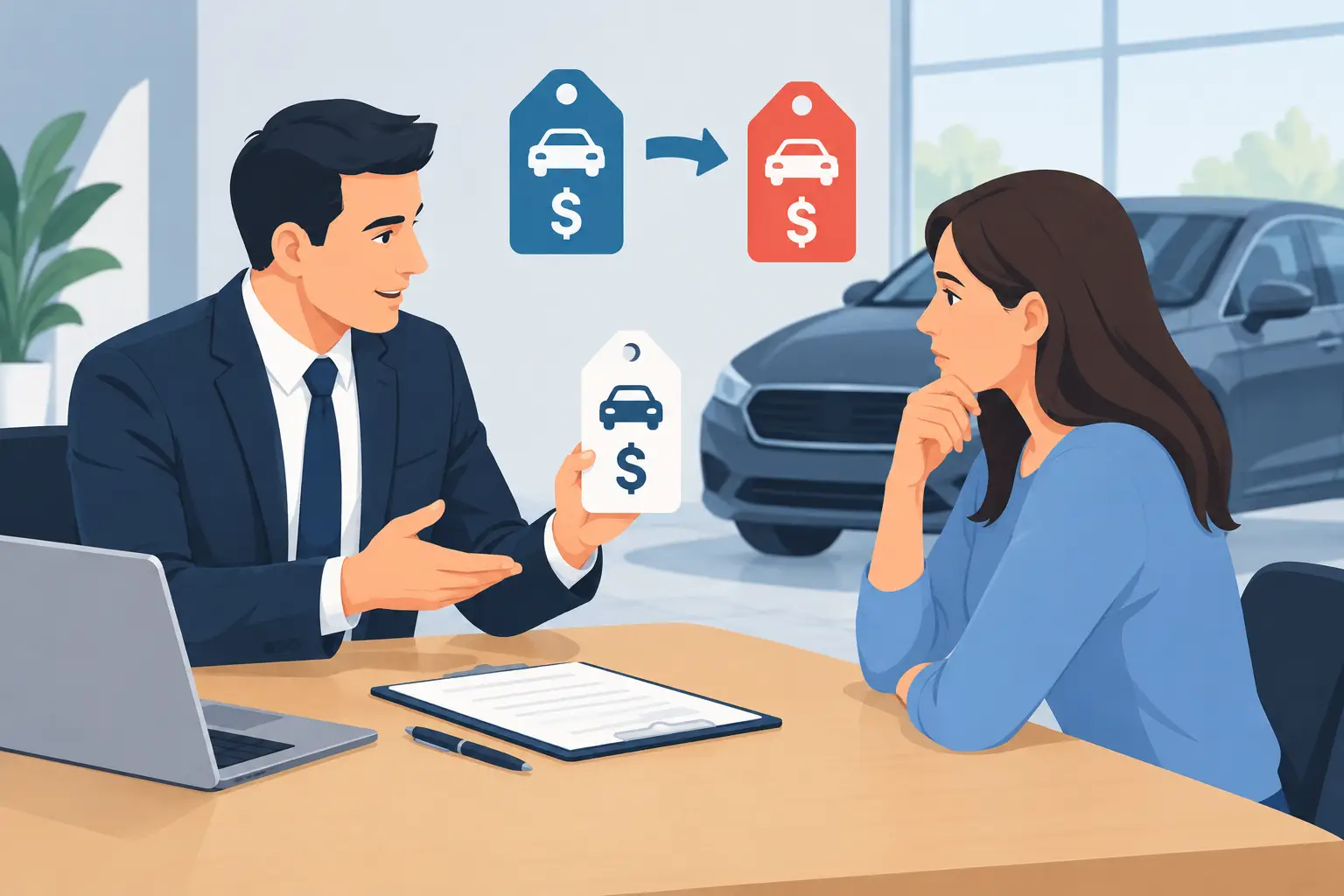
A salesperson says, “You’ve got a deal,” you shake hands, and then the numbers change in the finance office. It is fair to ask: can a dealer change an agreed price? A dealer can ask you to accept a higher price or new charges, but whether they can enforce that change depends on what you agreed to, what you signed, and whether the deal included conditions that have not been met.
The practical rule is simple: until you have a clear, signed agreement showing the full out-the-door amount, do not assume the deal is finished. Verbal promises and a monthly payment quote are not enough protection. Your job is to make the complete deal visible before you sign or hand over more money.
When can a dealer change an agreed price?
A dealer may try to change the price for several reasons. Some are legitimate corrections. Others are pressure tactics that count on a buyer being tired, rushed, or emotionally committed to the vehicle.
The key question is not whether the dealer says the price changed. It is what your paperwork says and whether the change is covered by a real, disclosed condition of the deal.
Before you sign a purchase agreement
Before a buyer’s order, purchase agreement, or retail installment contract is signed, the dealer generally has more room to change its offer. That is frustrating, but it means you should be equally willing to change your mind and walk away.
A salesperson’s text, email, or spoken commitment can still be useful evidence of what was discussed. But it may not lock in a transaction if the dealer’s written documents say the offer was subject to financing approval, vehicle availability, a trade appraisal, or management approval.
Ask for a written buyer’s order that shows the vehicle identification number, selling price, trade-in value, rebates, dealer fees, taxes, registration charges, add-ons, and the total amount due. If a number is not on the document, treat it as unsettled.
After you sign, but before financing is final
This is where many buyers get caught off guard. You may sign paperwork, take the car home, and later receive a call saying the lender did not approve the loan on the terms quoted. This is often called spot delivery or yo-yo financing.
Sometimes the original financing really does fall through. A lender may reject the application, require a larger down payment, or approve the loan only at a different rate. But that does not automatically mean you have to accept a worse deal. Read the contract carefully. Some agreements make the sale conditional on financing approval, while others may be final once signed.
Do not agree to higher payments, a longer loan term, or a bigger down payment over the phone. Ask for the reason in writing, request the original signed documents, and compare the revised terms line by line. You may have the option to return the vehicle rather than sign a new contract, depending on the contract and state law.
After a final contract is signed
If you have a fully executed contract with a defined selling price and no unmet contingency, the dealer usually cannot simply rewrite the deal because it regrets the number. A signed contract matters.
That said, contract rules vary by state, and errors can complicate the situation. A clearly obvious clerical mistake, such as a vehicle listed at $2,500 instead of $25,000, may be treated differently from a dealer later claiming it wants more profit. A dealer may also be able to unwind a transaction if it cannot deliver the exact vehicle or if a stated rebate was unavailable.
Do not let a vague statement like “the computer made a mistake” do all the work. Ask the dealer to identify the exact contract term, disclose the correction, and provide updated paperwork. If you do not agree, avoid signing replacement documents until you understand your options.
Price changes that should make you stop
Not every changed number is a scam. Taxes and government registration costs can vary, especially if an estimate was used. A trade-in figure can also change if the dealer discovers undisclosed damage, a payoff is higher than stated, or the title cannot be transferred.
But several common changes deserve immediate scrutiny:
- A mandatory accessory package appears after you agreed on the vehicle price.
- A dealer fee, protection plan, nitrogen tires, tracking device, or paint product is added without your approval.
- The dealer shifts attention from the total price to a monthly payment that is lower only because the loan term got longer.
- A promised rebate disappears without a clear explanation of why you did not qualify.
- The finance office says a warranty or GAP coverage is required for loan approval.
Optional products are often presented as if they are required. They usually are not. Ask whether each item is required by law, required by the lender, or simply sold by the dealership. Get the answer in writing. If it is optional, you can decline it or negotiate its price.
Protect the out-the-door number, not just the sale price
A low vehicle price can still turn into an expensive deal. The number that matters is the out-the-door price: the full amount you will pay to buy the vehicle before financing costs, including applicable taxes, title and registration charges, dealer fees, and every add-on.
Before you visit the dealership, request an itemized out-the-door quote by email or text. It should identify the exact vehicle, preferably by VIN or stock number. A quote for “a 2025 SUV at this price” is not enough if the dealer has multiple trims, colors, or vehicles with different equipment.
If you are financing, negotiate the vehicle price first. Then review the loan separately. A dealer can make a deal look attractive by quoting a payment that hides a higher interest rate, a longer term, negative equity rolled in from your old loan, or costly products added to the amount financed.
A better question than “What will my payment be?” is: “What is the total amount financed, APR, term, and total of payments?” Those figures make it much harder for anyone to disguise a more expensive deal.
What to do when the dealer raises the number
Stay calm and avoid debating the salesperson’s intentions. Bring the conversation back to the documents. Say that you agreed to a specific out-the-door amount and ask the dealer to show exactly why the new figure differs.
If the dealer cannot provide a credible, written explanation, be ready to leave. The strongest leverage a buyer has is the ability to walk away before signing revised paperwork. Do not let time spent test-driving, negotiating, arranging insurance, or falling in love with the vehicle turn into a reason to accept a bad deal.
If you already signed, keep copies of every document, advertisement, email, text, deposit receipt, and financing disclosure. Write down the names of the people involved and the date of each conversation. If the dealer is pressuring you to sign new terms, contact your state consumer protection office, motor vehicle dealer regulator, or a consumer attorney for guidance on your specific contract.
A chargeback or public complaint may feel tempting, but start with your paperwork and the proper regulator. Your strongest case is organized, factual, and based on what the dealer represented in writing.
A deposit does not always mean the price is locked
Buyers often assume a deposit secures the vehicle and the agreed price. Sometimes it does. Sometimes it only holds the car temporarily.
Before paying a deposit, ask whether it is refundable, what conditions apply, and whether the written agreement locks in the out-the-door price. Get those answers on the receipt or buyer’s order. A card transaction labeled simply “deposit” may not explain whether the money is refundable or whether either side can cancel.
If a dealer will not put the deal terms in writing before taking your money, that is useful information. It tells you the commitment may be one-sided.
Bring a second set of eyes before you commit
Car deals move quickly on purpose. By the time a buyer reaches the finance office, they may be focused on getting the keys rather than checking whether the contract still matches the agreement.
Slow the process down. Compare every line to the quote you received. Check that the vehicle, trim, VIN, trade value, down payment, APR, loan term, and optional products are correct. If the paperwork does not match, stop and ask why. You do not need to sign while someone is standing over you.
An independent deal review can also help when the numbers are complicated, especially if you have a trade-in, negative equity, manufacturer incentives, or financing that is still conditional. Auto Ally Marketplace can help buyers seek practical, buyer-side support before they commit to a deal they do not fully understand.
The right vehicle is only a good purchase at the right total price and terms. Keep the conversation on the written out-the-door number, and never let urgency make the decision for you.
Leave a Reply