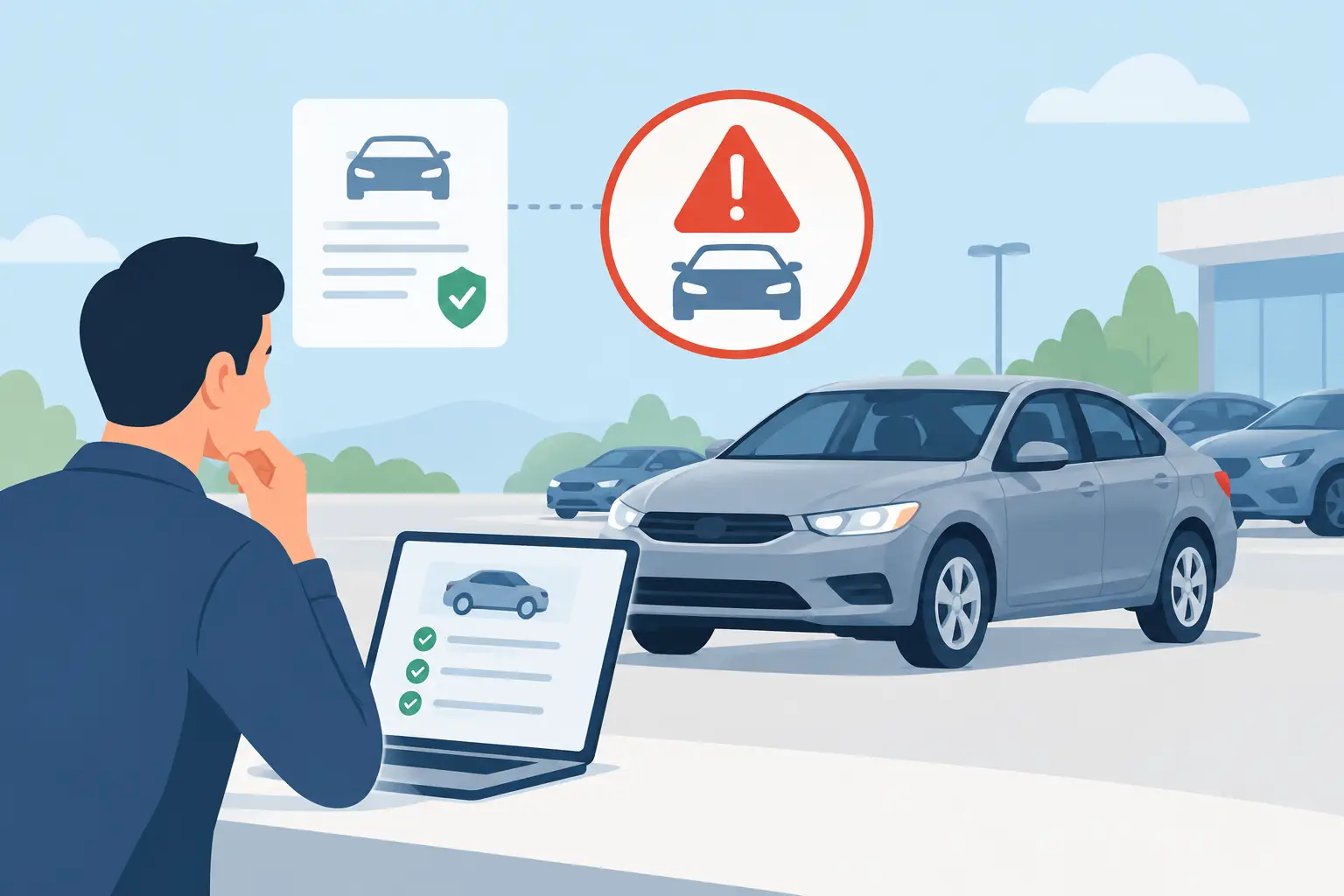
A clean title, a polished exterior, and a dealer saying the vehicle has been “inspected” can make a used car feel like a safe bet. But vehicle recalls can change that picture fast. An unresolved recall may involve airbags, brakes, fuel systems, steering, software, or another issue that affects whether the car is safe to drive at all.
A recall is not automatically a reason to walk away. Many recalled vehicles are repaired quickly at no cost to the owner. The problem is buying before you know whether the specific vehicle has been fixed, whether a repair is available, and how the issue changes the deal you are being offered. That is where a few minutes of research can protect you from a much more expensive mistake.
What Vehicle Recalls Actually Mean
A vehicle recall happens when a manufacturer determines that a vehicle, vehicle equipment, car seat, or tire has a safety-related defect or does not meet a federal safety standard. The manufacturer must notify affected owners and provide a remedy, usually a repair, replacement, or software update, without charging the owner.
That definition matters because a recall is different from normal maintenance, a service recommendation, or a warranty repair. An oil leak on one car does not necessarily create a recall. A defect affecting a defined group of vehicles can.
The recall may apply only to certain production dates, trim levels, engines, or parts. Two nearly identical-looking SUVs can have different recall histories. That is why checking a model name alone is not enough. You need the vehicle identification number, or VIN, for the exact car you are considering.
Why an Open Recall Should Change the Conversation
An open recall means the vehicle is affected and the recall remedy has not been recorded as completed. It does not always mean the car is immediately dangerous, but it does mean you should stop treating the purchase as routine.
Some open recalls involve a straightforward software update that can be completed in an afternoon. Others may involve parts that are unavailable, an interim safety warning, or a defect that makes the vehicle a poor fit for your needs right now. A family considering a minivan with an unresolved airbag or seat belt recall should not treat that the same way as a minor display-screen issue.
Open recalls can also affect your leverage. If the dealer expects you to take responsibility for arranging a recall repair after purchase, that convenience has value. Do not let the seller present a known safety issue as though it is a favor they are offering to address later. Ask for the repair to be completed before delivery whenever possible, and get that commitment in writing.
For private-party purchases, the decision can be more complicated. The seller may not be required to repair the recall before selling, and the vehicle may be priced accordingly. You can still have qualifying recall work performed at an authorized dealership, but you should confirm the remedy is available before you hand over money.
Check the VIN, Not Just the Seller’s Word
The seller may tell you there are “no recalls” because they have not received a notice, because they checked an outdated report, or because they mean there are no recalls they know about. None of those answers is good enough.
Ask for the VIN early, ideally before you visit the car or discuss final numbers. Use the VIN to check for unrepaired safety recalls through the federal recall database and verify the result with a franchised dealership that services that brand. The dealership can often confirm open campaigns, whether parts are available, and whether a completed repair appears in the manufacturer’s service records.
Check again shortly before signing. Recall information changes. A vehicle can receive a new recall after it is listed for sale, and database updates can take time to appear across different reports.
If a dealer will not provide the VIN before you arrive, treat that as a warning sign. You cannot make a fully informed decision without knowing exactly what vehicle is being offered. There is no good consumer-first reason to keep that basic information from a serious buyer.
Ask These Questions About Any Open Recall
Keep the conversation specific. Ask what the recall concerns, whether the remedy is available now, and when the repair can be completed. Ask whether the work will be done before delivery and whether the dealer will provide the repair order showing it was completed.
Also ask whether there are any manufacturer service campaigns or warranty extensions related to the same component. These are not always formal recalls, but they can reveal a pattern worth understanding. A recall repair may solve the official defect while a related issue remains a potential ownership cost.
If the answer is vague – “it is nothing major” or “you can handle it later” – ask for documentation. A seller who wants your business should be able to provide clear facts, not pressure you to accept uncertainty.
A Recall Repair Does Not Replace an Inspection
It is tempting to think a completed recall means the vehicle has been thoroughly checked over. It does not. Recall work addresses a defined issue. It does not tell you whether the transmission shifts properly, the tires are safe, the suspension is worn, or prior collision repairs were done correctly.
This is especially relevant when a vehicle has several completed recalls. Multiple recalls do not automatically make a car bad, particularly if it is an older model with a long production run. But they give you a reason to look more closely at maintenance records, the quality of past repairs, and the car’s overall condition.
A pre-purchase inspection remains one of the strongest protections you can add to a used-car deal. An independent technician can assess current mechanical condition and look for signs that the vehicle has been neglected, damaged, modified, or poorly repaired. Pair that inspection with recall research, not instead of it.
Know the Difference Between a Recall and a Buyback
Some vehicles are repurchased by manufacturers after repeated failed repair attempts under state lemon laws or other programs. These vehicles may be resold with branded titles or disclosures, depending on the situation. That is different from an ordinary recall.
A recall affects a group of vehicles and often has a clear repair path. A buyback can signal that one particular vehicle had a persistent problem. If a listing mentions a manufacturer buyback, branded title, lemon history, or a significant discount, slow down and investigate the reason. The lower price may be fair, but only if you understand the risk and can live with the trade-offs.
Financing and insurance can also be less straightforward for branded vehicles. Before you negotiate hard on price, make sure a lender will finance the car and that you can insure it on acceptable terms.
Use Recall Status in Your Negotiation
A completed recall should not earn the seller extra credit. It is basic responsibility, not an upgrade. On the other hand, an open recall with an available repair can be a reasonable condition of purchase: complete the repair, provide proof, then you will proceed if the rest of the deal checks out.
If parts are backordered or the repair cannot happen promptly, decide based on the seriousness of the defect and your transportation needs. You may be able to negotiate a lower price, but a discount does not make an unsafe vehicle safer. For high-risk recalls, walking away may be the strongest move.
Do not allow recall uncertainty to distract from the full out-the-door deal. Review the vehicle price, taxes, registration, dealer fees, add-ons, financing terms, inspection results, and recall status together. A dealer may fix an open recall while still making up the difference through inflated accessories or financing charges.
Before You Sign, Get a Clear Paper Trail
Before finalizing the purchase, keep copies of the VIN recall results, repair orders for completed work, the buyer’s order, and any written promises about pending repairs. If the vehicle is being sold with an unresolved recall, make sure you understand the issue, the expected repair timeline, and who will coordinate the appointment.
For shoppers who want another set of eyes before committing, an independent deal review or inspection coordination can help separate a manageable recall from a deal that carries more risk than it is worth. Auto Ally Marketplace is built around that buyer-side mindset: get clear answers before the paperwork makes the decision harder to reverse.
The best used-car purchase is not the one that feels urgent on the lot. It is the one you can explain to yourself afterward: you checked the VIN, understood the risks, verified the numbers, and chose with your eyes open.
Leave a Reply