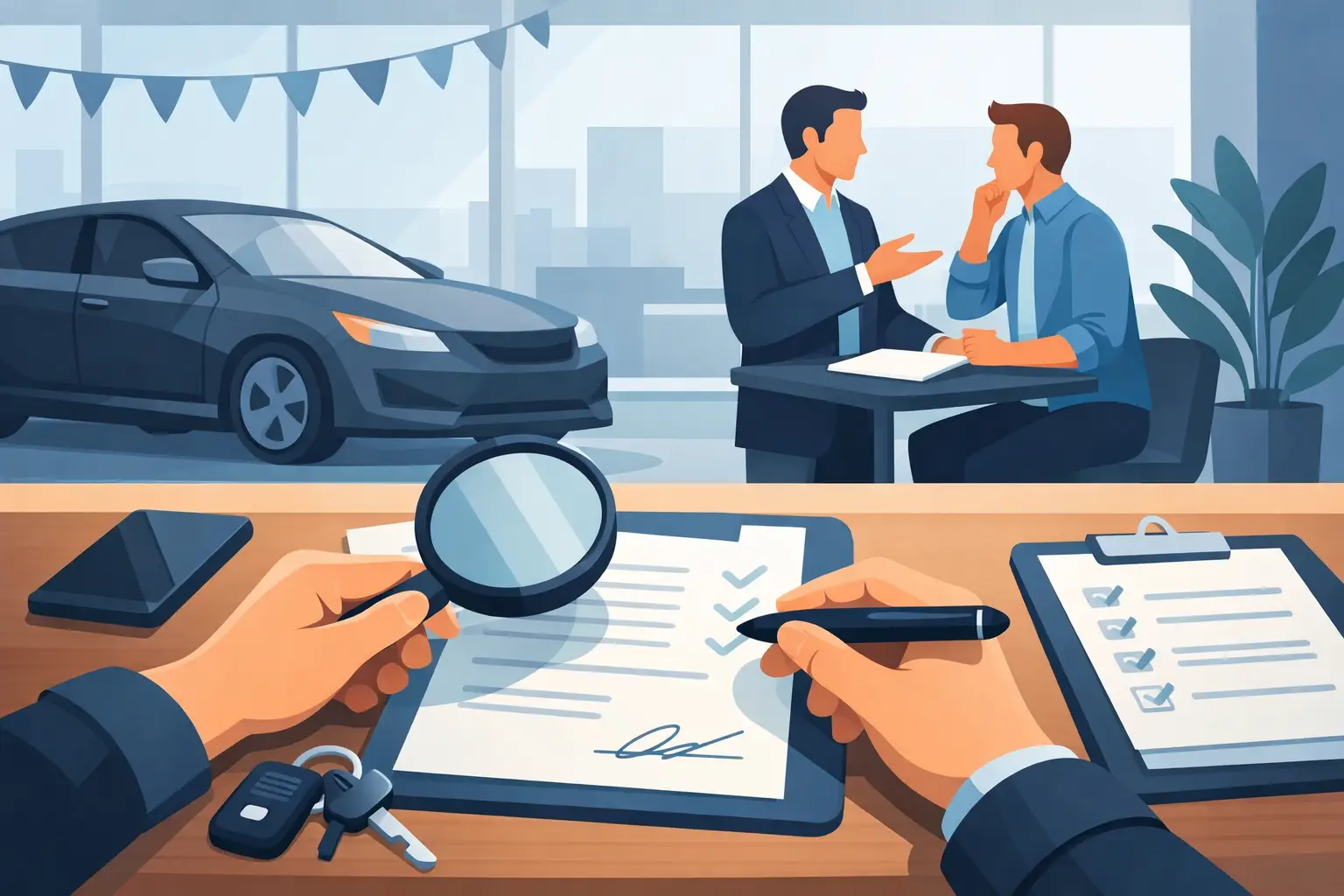
The last hour at a dealership can feel designed to wear you down. You have test-driven the car, talked numbers, waited for the finance office, and may be ready to get home. That is exactly why knowing what to do before signing car papers matters. A signature can lock in thousands of dollars in price, interest, add-ons, and obligations that are difficult to undo later.
You do not need to be a car expert to protect yourself. You need a clear pause point, the right documents in front of you, and the willingness to ask for an answer that makes sense. If anything changes from what you agreed to, stop the process. A dealer can print new paperwork. You should not have to absorb a bad deal because the room feels rushed.
Before Signing Car Papers, Match Every Number
Start with the out-the-door price, not the monthly payment. The out-the-door number should include the vehicle price, sales tax, title and registration costs, documentation fees, dealer-installed accessories, protection products, and every other charge required to complete the purchase.
Ask for an itemized buyer’s order or purchase agreement and compare it to the deal you discussed. The selling price should match. Any trade-in allowance should match. Any rebate or incentive should be clearly shown, along with the eligibility requirements. If a discount depends on financing through a particular lender, military status, recent graduation, or another condition, make sure you actually qualify before counting it as savings.
A low monthly payment can hide a higher vehicle price, a longer loan term, or both. For example, stretching a loan from 60 to 84 months may lower the payment, but it usually means more interest paid and a greater chance of owing more than the car is worth. Focus first on the total price and total amount financed. Then decide whether the payment fits your budget.
Do not accept vague labels such as “market adjustment,” “dealer package,” or “protection fee” without a full explanation. Some charges may be negotiable. Others may be optional products presented as if they are mandatory. Ask a simple question: “Is this required by law, required by the lender, or optional?” If it is optional, ask to see the contract without it.
Read the Financing Contract Line by Line
The retail installment contract is not just a formality. It is the agreement that determines what you will owe, when you will owe it, and what happens if you fall behind. Take your time with it.
Confirm the annual percentage rate, finance charge, amount financed, number of payments, payment amount, due date, and total of payments. The APR tells you the yearly cost of borrowing, while the finance charge shows the dollar cost of the loan over its full term. Both matter.
Also confirm whether your financing is final. In some cases, a buyer leaves with a vehicle before the lender has fully approved the deal. This can lead to a later call saying the original financing did not go through and you need to return to sign at a higher rate or make a larger down payment. Ask directly whether the financing is approved and funded, or whether it is conditional. Get the answer in writing when possible.
If you are buying an extended warranty, GAP coverage, maintenance plan, tire and wheel coverage, or another finance-office product, ask for the price of each item separately. These products can be useful for some buyers, but they are not automatically a good value. Consider the coverage limits, deductible, exclusions, cancellation policy, and whether the cost is being rolled into your loan. Financing a $2,000 product for years means paying interest on it, too.
You can say no. You can also ask to think about it outside the pressure of the finance office. A legitimate purchase decision should survive a night of consideration.
Verify the Vehicle You Are Actually Buying
Paperwork can be perfect and still attach you to the wrong vehicle. Before signing, inspect the exact car identified by its vehicle identification number, or VIN. Do not assume it is the same one you drove, especially if the dealer is locating a vehicle from another lot or another state.
Check the VIN, trim level, model year, exterior color, mileage, and key features against the buyer’s order. If you agreed to specific equipment such as all-wheel drive, a third-row seat, a towing package, driver-assistance features, or a charging cable for an EV, verify that it is present.
For a used vehicle, look for warning lights, unusual tire wear, cracked glass, body damage, missing accessories, and signs of water intrusion. Review the vehicle history report, but do not treat it as a substitute for an independent inspection. History reports can miss accidents, mechanical problems, and maintenance gaps. A pre-purchase inspection is one of the strongest ways to reduce uncertainty, particularly on higher-mileage vehicles, luxury models, trucks used for towing, and vehicles sold by private parties.
If a repair, paint touch-up, extra key, accessory, or service visit was promised, get it written into a signed document with a specific description. “We’ll take care of it later” is not a reliable plan once the sale is complete.
Review Fees, Trade-In Terms, and Required Documents
The final paperwork should not contain surprises. Take a few minutes to review the documents as a set rather than signing each page as it is handed to you. Keep copies of everything you sign.
Pay close attention to these four areas:
- Dealer fees: Documentation, filing, electronic filing, and similar charges can vary. A fee may be disclosed, but disclosure does not automatically mean it cannot be questioned.
- Your trade-in: Confirm the agreed value, payoff amount, and whether any negative equity from your old loan is being added to the new one.
- Down payment: Make sure the amount and method of payment are recorded correctly. Never sign paperwork showing a larger cash down payment than you actually provided.
- Title and registration: Verify whose name will appear on the title, the correct address, and any lienholder information if you financed the vehicle.
If you are trading in a vehicle with an existing loan, ask how and when the old loan will be paid off. Keep making payments until you confirm the payoff has been processed. A trade-in does not erase your responsibility to the old lender until that account is actually settled.
For a private-party purchase, the title deserves even more attention. The seller’s name should match the title, the VIN should match the vehicle, and there should be no unexplained lien listed. Rules vary by state, but missing or altered title information can create expensive registration problems after money has changed hands.
Do Not Let Pressure Make the Decision for You
A salesperson or finance manager may tell you the deal is only good today, another buyer is waiting, or the paperwork needs to be signed immediately. Sometimes there are real timing limits on incentives or inventory. Often, pressure is simply a way to prevent careful review.
You are allowed to read. You are allowed to use your phone calculator. You are allowed to call your bank, insurance agent, spouse, or a trusted advisor. You are allowed to leave if the numbers change, the vehicle condition is unclear, or the explanations stop adding up.
This is where independent buyer-side support can help. Auto Ally Marketplace can connect shoppers with practical assistance for deal reviews, pricing validation, negotiation support, and vehicle inspection coordination before a commitment is made. A second opinion is especially valuable when a deal feels complicated or suddenly different from the quote you received.
Give Yourself One Final Walk-Away Test
Before you sign, ask yourself: If this were the only car available, would I still accept this exact price, loan, vehicle condition, and set of products? If the answer is no, do not sign because you have invested time in the process. Time spent walking away is cheaper than years of payments on a deal you regret.
The right car deal should be understandable on paper, not just persuasive in the showroom. Slow the moment down, verify what you are buying, and sign only when the numbers and the vehicle both earn your confidence.