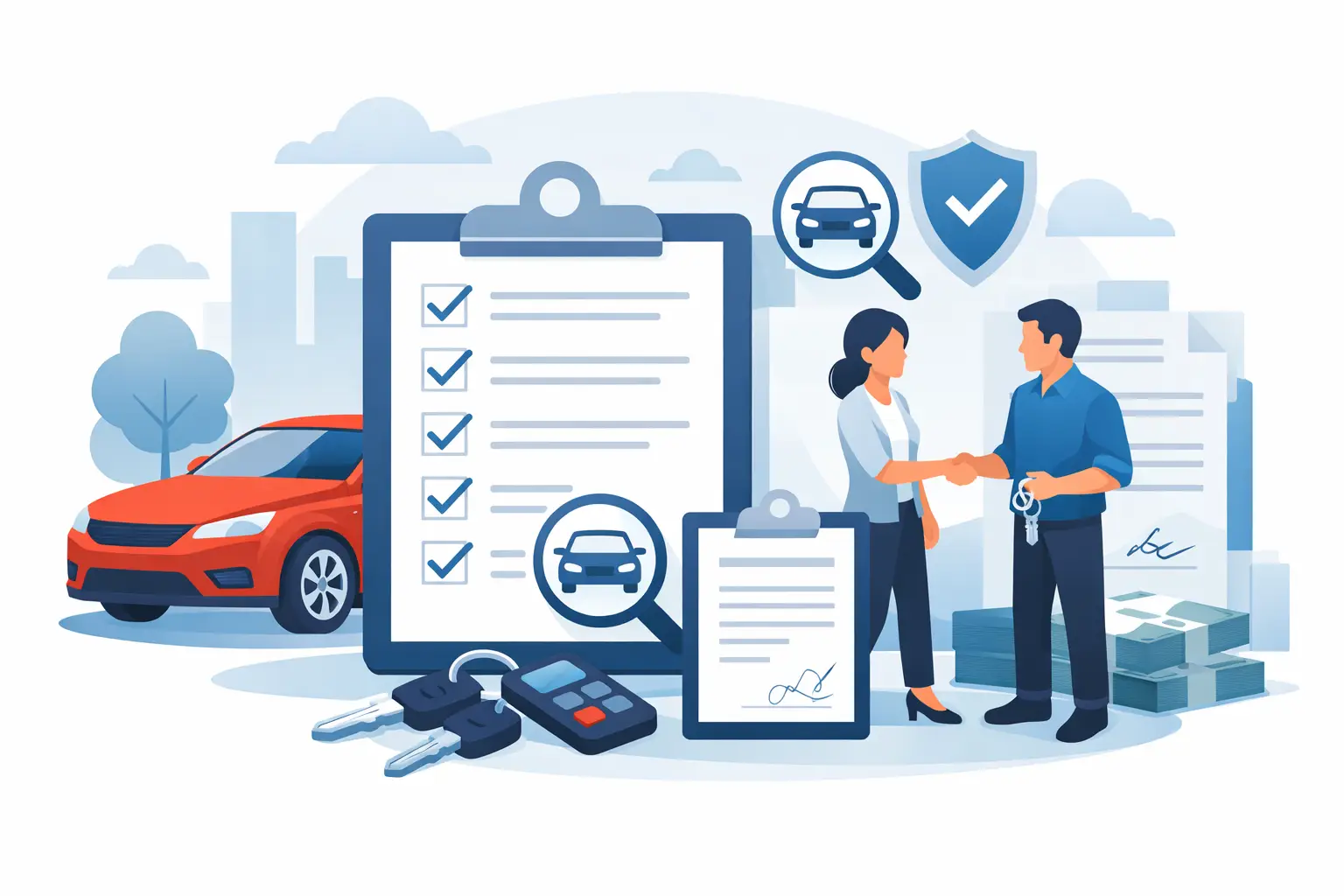
A car can look like the right deal until the paperwork, inspection, or financing details tell a different story. This car buying checklist helps you slow the process down, separate facts from sales pressure, and make sure the vehicle, price, and terms all work for you before you commit.
The goal is not to win an argument with a dealer or private seller. It is to avoid buying a problem, paying more than you planned, or signing terms you did not fully understand. A good purchase should still make sense after the excitement wears off.
Start With Your Real Budget, Not the Monthly Payment
Before comparing vehicles, decide what you can afford to spend in total. That means more than the advertised price or the payment a salesperson says they can get you into. Your out-the-door cost includes the vehicle price, taxes, title and registration, documentation fees, dealer add-ons, insurance, fuel, maintenance, and any interest you will pay if you finance.
A lower monthly payment can hide a longer loan term. Stretching a loan from 60 to 72 or 84 months may make the payment look manageable, but it usually increases the total interest paid and can leave you owing more than the car is worth for longer. If the payment only works because the term is extended, the car may be outside your budget.
Set three numbers before you shop: your maximum out-the-door price, your maximum monthly payment, and the amount you can put down without draining your emergency savings. Keep those numbers private until you understand the full deal.
Narrow the Vehicle Choices Before You Fall for One Listing
Start with how you will actually use the vehicle. A family that needs three child seats has different needs from a commuter who drives 80 miles a day. Think about passenger space, cargo room, parking, fuel costs, weather, towing needs, and how long you expect to keep the vehicle.
Then research several makes and models, not just one. A single popular model can create pricing pressure when inventory is tight. Comparable vehicles may offer better reliability, lower insurance costs, or more room for the same money. Used-car shoppers should also look at common trouble spots by model year, recall history, ownership costs, and expected maintenance.
Do not let a color, a big screen, or a limited-time message push reliability and fit into the background. Features matter, but they do not fix a vehicle that is too expensive, too small, or costly to maintain.
Car Buying Checklist: Verify the Vehicle Itself
Whether you buy from a dealership or a private seller, inspect the actual vehicle you are considering. Listings and vehicle history reports are useful starting points, but neither replaces a careful look or an independent pre-purchase inspection.
Walk around the car in daylight if possible. Look for uneven panel gaps, paint that does not match, overspray, rust, tire wear, cracks in lights or glass, and signs of fluid leaks. Inside, test the air conditioning, heat, windows, locks, screens, cameras, seat adjustments, warning lights, and every feature you expect to use.
During the test drive, pay attention to more than acceleration. The car should start cleanly, track straight, brake without pulling or vibration, shift smoothly, and avoid unusual noises over bumps or during turns. Turn off the radio for part of the drive. Small sounds are easy to miss when a salesperson is talking.
Before moving forward, verify these essentials:
- The vehicle identification number matches the paperwork, windshield plate, and door-jamb label.
- The title status is clear, and any lien has been properly released before money changes hands.
- The mileage is consistent with service records, condition, and the vehicle history report.
- Open recalls have been addressed or you understand exactly what remains outstanding.
- Tires, brakes, battery, fluids, and other wear items have enough life left to avoid an immediate repair bill.
- An independent mechanic has inspected the vehicle, especially if it is used, high-mileage, previously damaged, or being sold as-is.
A seller who resists a reasonable independent inspection is giving you useful information. You do not need to argue about it. You can simply walk away.
Check the Price Against the Market
The asking price is not proof of value. Compare it with similar vehicles based on year, trim, mileage, condition, location, drivetrain, and included equipment. A low price may be a genuine opportunity, but it can also reflect accident history, mechanical needs, missing features, or fees that appear later.
For a dealership purchase, ask for an itemized buyer’s order showing the sale price and every charge before discussing payment. Watch for accessories or protection packages that were added without a clear request: paint protection, nitrogen-filled tires, VIN etching, wheel coverage, theft products, and service plans. Some may be useful in the right situation, but they should be your choice, not a condition of buying the car.
For a private-party sale, confirm who legally owns the vehicle and understand your state’s title-transfer rules. Be especially cautious when the name on the title does not match the person selling the car. That situation can be legitimate, but it requires clear documentation, not a verbal explanation.
A fair deal is not always the lowest sticker price. A slightly higher-priced vehicle with documented maintenance, better tires, a clean inspection, and no surprise fees can cost less in the long run.
Bring Your Own Financing Option
If you plan to finance, get preapproved through a bank or credit union before visiting the dealership. A preapproval gives you a rate and term to compare against the dealer’s offer. It also keeps the conversation focused on the total price of the car rather than how much payment can be moved around.
Dealer financing is not automatically bad. Sometimes a manufacturer incentive or promotional rate makes it the better option. The key is comparison. Review the annual percentage rate, loan length, total finance charge, and whether any rebate depends on using dealer financing.
Avoid making a decision based only on payment. Ask to see the full loan details in writing. If a trade-in is involved, negotiate the new vehicle price, trade value, and financing separately. Combining all three can make it harder to see where money is being gained or lost.
Read Every Document Before You Sign
The final paperwork deserves the same attention as the test drive. Match the numbers on the contract to the deal you agreed to: vehicle price, trade allowance, down payment, taxes, fees, interest rate, loan term, and total amount financed. If something changed, stop and ask why.
Do not feel obligated to sign because you have spent hours at the dealership, brought your family, or already test-driven the vehicle. Pressure often increases near the finish line because that is when buyers are tired and eager to leave. Taking ten extra minutes to read can prevent years of expensive frustration.
Ask whether each optional product is required. Gap coverage can make sense when you put little money down or finance a large portion of the purchase, but it should be evaluated against your loan and insurance situation. Extended warranties and maintenance plans can also have value, yet coverage limits, deductibles, exclusions, and price matter. “Included” is not the same as free.
Before leaving, make sure you receive copies of every signed document, temporary registration information if applicable, warranty terms, inspection records, and any written promises about repairs or accessories. If a seller agrees to fix something, get it in writing with a clear deadline.
Know When to Pause or Walk Away
The strongest move in car buying is being willing to leave. Pause the deal if the numbers keep changing, the seller will not provide basic documentation, the inspection uncovers major concerns, or you cannot get a straight answer about fees. There will be another vehicle. Replacing lost money or living with a bad car is much harder.
If you want a second opinion before committing, independent deal review, pricing validation, negotiation support, and inspection coordination can help you see the deal clearly. Auto Ally Marketplace is built around that buyer-side perspective: helping shoppers move forward with more confidence and less guesswork.
The right car purchase should not depend on feeling rushed, grateful, or afraid to miss out. Give yourself permission to verify the facts, ask for the paperwork, and walk away from any deal that stops making sense.