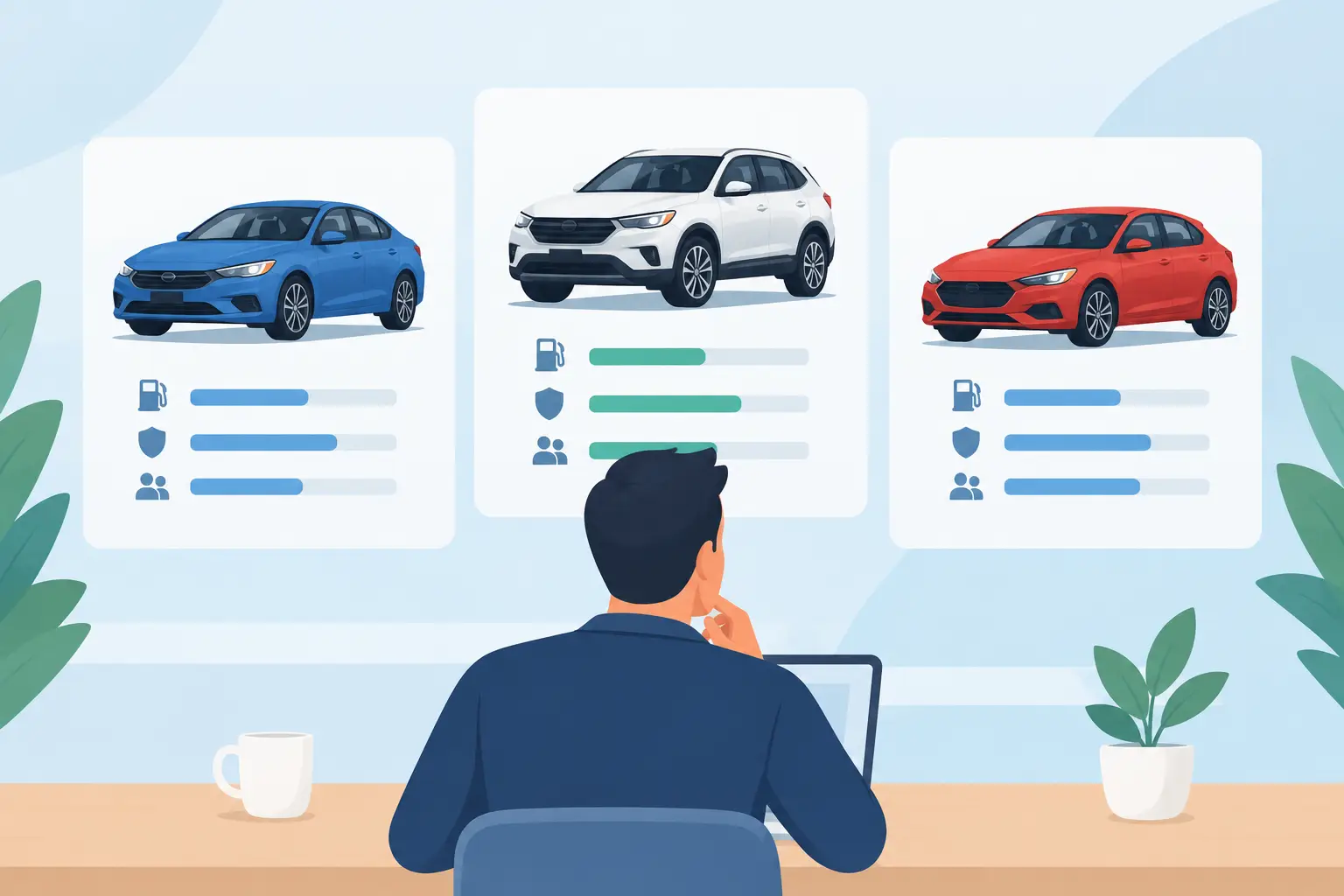
A compact SUV can look like the safe choice until you realize the rear-facing car seat leaves almost no room for the front passenger. A lower-priced sedan can seem like a bargain until insurance, tires, and expected repairs change the math. Getting help comparing car models means looking past the monthly payment and choosing the vehicle that actually fits your life, budget, and risk tolerance.
The dealer’s job is to move inventory. Your job is to make a decision you will still feel good about after the excitement wears off. Those are not always the same thing. A clear comparison process gives you leverage, keeps the conversation focused on your needs, and makes it harder for anyone to steer you into a vehicle that is merely convenient for them to sell.
Start With Your Non-Negotiables, Not a Brand
Many shoppers begin with a badge, a body style, or a vehicle they saw on the road. There is nothing wrong with having favorites, but a better comparison starts with the job the car must do. Think about your normal week, not the occasional road trip or the version of your life you hope to have someday.
How many people will ride in the vehicle most days? Do you need to fit a stroller, sports gear, work equipment, a large dog, or aging parents? Are you parking in a tight garage, driving long highway stretches, dealing with snow, or relying on public charging? These answers narrow the field faster than browsing every trim level online.
Separate your needs into three categories: must-haves, strong preferences, and nice-to-haves. A must-have might be enough rear-seat space for two child seats, all-wheel drive for your specific roads, or a towing rating that supports your trailer. A panoramic roof, premium audio system, or larger wheels may be enjoyable, but they should not outweigh the basics.
This distinction matters because features can distract from fit. A vehicle with a beautiful screen and a promotional price is still the wrong choice if it is uncomfortable, too costly to insure, or impractical for your household.
Help Comparing Car Models Means Comparing Ownership Costs
The purchase price is only one part of what a vehicle costs. Two models that differ by a few thousand dollars on the window sticker can reverse positions once you account for financing, insurance, fuel, maintenance, repairs, and depreciation.
Start by setting a total vehicle budget, not just a target payment. A longer loan can make an expensive car look manageable while keeping you in debt longer and increasing the chance that you owe more than the vehicle is worth. Ask for the out-the-door price, including taxes, registration, documentation charges, dealer-installed accessories, and every fee. Then compare financing using the same down payment, loan term, and interest rate assumptions.
Next, look at the costs likely to follow you home. A turbocharged luxury-leaning model may offer more power and features, but it can require premium fuel, pricier tires, and higher insurance premiums. A hybrid may reduce fuel spending, especially for city drivers, but the savings depend on your annual mileage and local fuel prices. An electric vehicle can be inexpensive to operate, but home charging access, charging habits, insurance, and tire wear still belong in the calculation.
Depreciation deserves attention too. Some vehicles hold value better because of demand, reliability history, or limited supply. That does not automatically make them the right buy, especially if their up-front price is inflated. It does mean a low purchase price should not be the only number guiding your decision.
Compare Trims Carefully
When comparing models, make sure you are comparing equivalent trims and equipment. A base model may advertise a tempting starting price but lack the driver-assist features, heated seats, power liftgate, or all-wheel drive you consider essential. Meanwhile, a higher trim may bundle useful upgrades with cosmetic extras you would never choose separately.
Build your comparison around the exact configurations you would realistically buy. This prevents the common mistake of comparing one model’s base MSRP to another model’s well-equipped price, then assuming the first vehicle is the better value.
Test the Details That Listings Cannot Explain
Specifications are useful, but they cannot tell you whether a vehicle works for your body, your passengers, or your routine. Test drive each serious contender on roads similar to the ones you use. Do not limit the drive to a quick loop around the dealership.
Pay attention to visibility, seat comfort, ride quality, braking feel, road noise, and how confidently the vehicle merges or accelerates at highway speed. Try the climate controls, navigation screen, phone connection, and parking cameras. A system that seems minor during a five-minute demonstration can become frustrating when you use it every day.
If cargo or passenger space is a deciding factor, bring the actual items that matter. Install the car seat if the seller allows it. Put the stroller in the cargo area. Have a taller family member sit behind the driver’s seat adjusted for you. Fold the rear seats and check whether the opening, not just the stated cargo volume, works for your gear.
Do not assume a larger vehicle is automatically more useful. Some midsize SUVs have less usable third-row space than others, and some compact models have clever storage that makes daily life easier. The right fit is practical, not just impressive on paper.
Look Beyond a Model’s Reputation
A vehicle can have a strong overall reputation and still have a certain year, engine, transmission, trim, or technology package worth examining more closely. Reliability is not a simple yes-or-no label. It is a pattern that needs context.
Review recall history, owner complaints, warranty coverage, and maintenance schedules for the exact model years you are considering. Pay special attention to major systems such as the engine, transmission, hybrid battery, infotainment system, and advanced driver-assistance equipment. If you are buying used, service records and a pre-purchase inspection matter more than a glowing reputation attached to the nameplate.
Safety calls for the same level of precision. Check crash-test performance and determine which safety features come standard on the actual trim. Automatic emergency braking, blind-spot monitoring, adaptive cruise control, and rear cross-traffic alert can vary by year and package. A feature listed in a model overview is not necessarily included on the vehicle in front of you.
Use a Simple Scorecard to Keep Emotion in Check
When you have narrowed your options to two or three vehicles, make the decision visible. Give each model a score from one to five for the factors that matter most to you, then give those factors different weights. A family hauling kids every day might prioritize safety, rear-seat room, reliability, and total cost. A commuter might put more weight on fuel economy, comfort, and parking ease.
Do not give every category equal importance. If you need a vehicle to tow, towing capability should count far more than ambient interior lighting. If you keep cars for ten years, long-term operating costs and repair history should carry more weight than resale value. The scorecard will not make the decision for you, but it exposes when one appealing feature is pulling attention away from more expensive trade-offs.
It also helps to name your deal-breakers in writing. Maybe one model’s insurance quote is too high. Maybe another does not fit your child seat safely. Maybe a third is only attractive if the dealer removes add-ons or meets a fair out-the-door price. Clear conditions help you walk away without second-guessing yourself.
Get an Independent Second Opinion Before You Commit
If the choices still feel close, outside guidance can save more than it costs. An independent expert can help compare the models against your actual needs, validate pricing, review a deal sheet, and flag where a dealer’s presentation leaves out meaningful costs. For a used vehicle, inspection coordination can also separate a good-looking listing from a sound purchase.
Auto Ally Marketplace is built around that buyer-side perspective. The goal is not to push you toward a particular vehicle. It is to help you ask sharper questions, compare the numbers fairly, and move forward with fewer blind spots.
The best car is rarely the one with the loudest advertising or the biggest discount on the windshield. It is the one that meets your real needs at a price you understand, with terms you can live with. Take the extra hour to compare carefully before you sign. That is often the moment when a stressful purchase becomes a confident one.