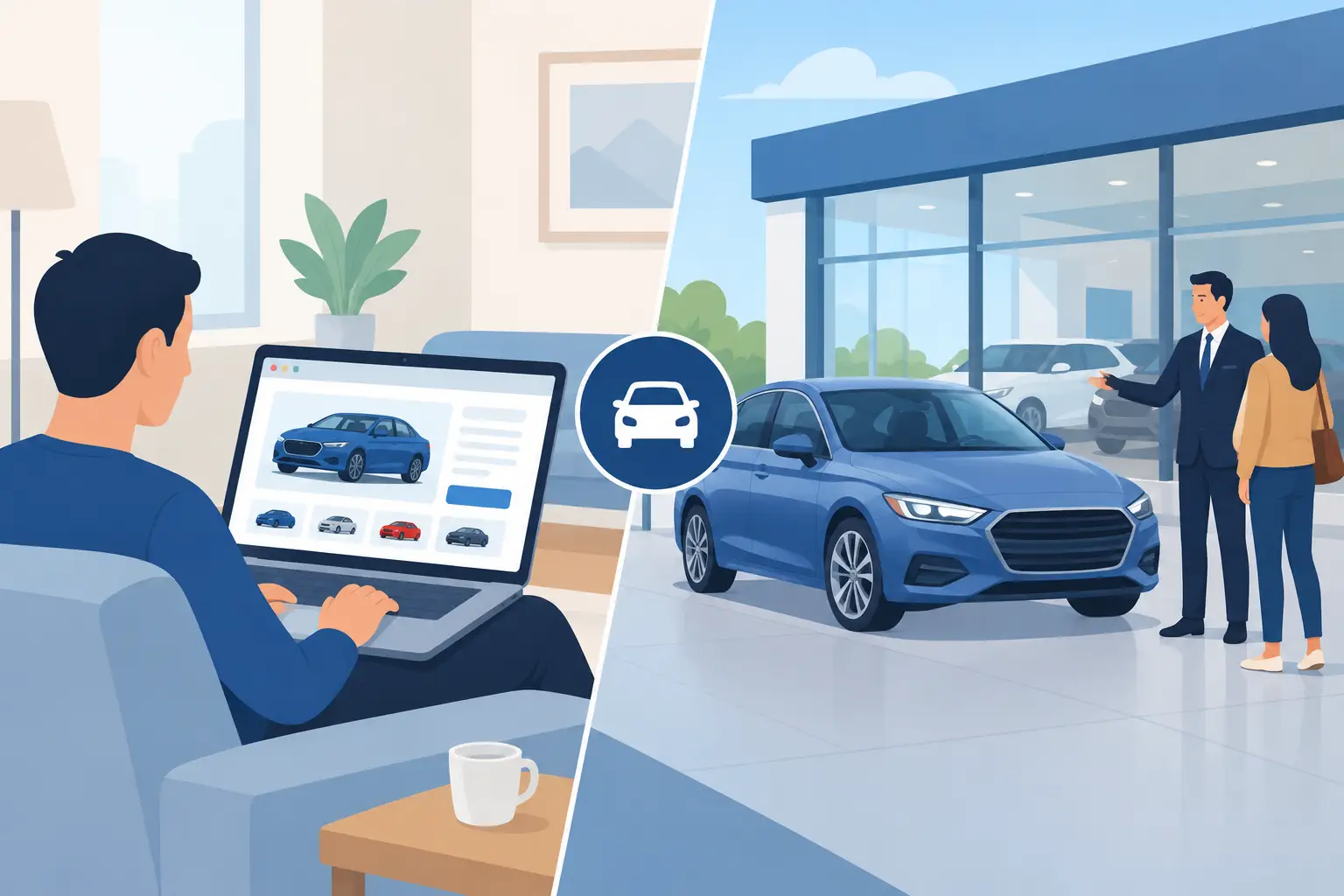
A vehicle can look like a great deal until the paperwork adds thousands in fees, the trade-in number drops, or a delivery-day surprise shows up. That is why online car buying versus dealerships is not simply a question of where you prefer to shop. It is a question of how much information you have, how much control you keep, and who is looking out for your side of the deal.
Online shopping has made it easier to compare vehicles without spending every Saturday on a dealer lot. Dealerships still offer real advantages, especially when you want to test-drive several options, see a vehicle up close, or resolve a problem face to face. The smarter choice depends on the car, the seller, and the safeguards you put in place before you sign.
Online Car Buying Versus Dealerships: The Real Difference
The biggest difference is not the website versus the showroom. It is how the transaction is structured.
With online car buying, shoppers can search inventory across a wider area, review listings on their own schedule, and often see an initial price without starting a conversation with a salesperson. Some online retailers offer fixed pricing, home delivery, return windows, and online financing tools. That convenience can be valuable for busy professionals, families, and buyers who would rather avoid a long dealership visit.
A dealership gives you direct access to the vehicle and the people handling the sale. You can inspect the interior, take a test drive, ask questions in real time, and negotiate in person. Local dealerships may also make trade-ins, service appointments, title work, and post-sale concerns easier to manage.
Neither route automatically protects you from a bad deal. An online listing can leave out condition details, show an attractive payment instead of the full out-the-door price, or make returns more complicated than expected. A dealership can advertise a competitive price, then add products and fees once you are in the finance office. The channel changes the experience. Your preparation changes the outcome.
Where Online Buying Can Work in Your Favor
Online buying is strongest when research and comparison matter most. You can filter by trim, mileage, price, features, and location in minutes. That broader search may help you find a better-equipped vehicle or avoid settling for the only option on a local lot.
It also gives you room to think. When you are shopping from home, you are less likely to make a decision just because a salesperson says another buyer is interested or the promotion expires tonight. A pause can be powerful. It gives you time to compare vehicle history information, estimate ownership costs, and review financing terms without feeling rushed.
For shoppers who already know the exact vehicle they want, online purchasing can reduce the time spent negotiating. Fixed-price sellers can be especially appealing if you dislike haggling. But fixed pricing is not the same as a verified fair price. You still need to compare similar vehicles, account for shipping or delivery charges, and evaluate the financing offer separately from the vehicle price.
The online risks buyers should not ignore
Photos are not an inspection. Even detailed photos may not reveal tire wear, paint repairs, smoke odors, warning lights, underbody corrosion, or mechanical concerns. A clean vehicle history report is useful, but it does not certify that the vehicle is problem-free.
Before committing to an online purchase, ask for the complete vehicle identification number, the full buyer’s order, and a clear breakdown of every fee. Confirm whether the price includes delivery, registration support, required add-ons, and any condition-related charges. If a return policy exists, read the mileage limit, deadline, transport responsibility, and exceptions. A seven-day return policy is only helpful if you understand what could make the vehicle ineligible for return.
If the car is used, arrange an independent pre-purchase inspection whenever possible. If an inspection cannot happen before delivery, know your inspection and return options before money changes hands.
Where Dealerships Still Have an Edge
A dealership can give you immediate, hands-on information. You can test how the vehicle accelerates, brakes, steers, and fits your daily life. Bring car seats, a golf bag, a mobility aid, or whatever else needs to fit. Pair your phone. Check the visibility. Listen for noises during a cold start. Small details can prevent a costly mismatch.
A local dealer may also be the better choice when you need a vehicle quickly or have a complicated trade-in. Being able to compare your current vehicle’s offer with the purchase figures in one place can simplify the process. It can also make it easier to address a title, registration, or repair issue after the sale.
The catch is that convenience can become pressure. Dealership negotiations often involve several moving parts: vehicle price, trade-in value, financing rate, loan term, warranties, protection packages, and fees. Focusing only on the monthly payment makes it easier for a dealer to hide a higher total cost inside a longer loan.
How to keep control at the dealership
Start with an out-the-door price, not a payment target. The out-the-door figure should include the vehicle price, taxes, registration, documentation fees, mandatory charges, and dealer-installed products. Ask for it in writing before you make a trip if possible.
Get a financing preapproval from a bank or credit union, even if you plan to consider dealer financing. This creates a real comparison point. A dealer may beat your rate, but you should be able to see the annual percentage rate, loan term, total amount financed, and total of payments without guesswork.
Treat your trade-in as a separate transaction. Research its value, get more than one offer if time allows, and do not let a strong trade-in number distract from an inflated vehicle price. If the numbers keep changing, slow the process down. You are allowed to leave.
The Questions That Matter in Either Buying Path
Whether you buy online or at a dealership, a few questions expose most avoidable problems. What is the full out-the-door price? Is the vehicle available right now? What is included in that price? Has the vehicle had an independent inspection? Are there open recalls, accident repairs, or known mechanical issues? What are the return, cancellation, and warranty terms?
For financing, ask whether any advertised price or rebate requires dealer financing, a trade-in, military status, or other qualifications. Ask if there is a prepayment penalty. If a product is presented as required, request that requirement in writing. Many products offered in the finance office, such as extended warranties, GAP coverage, tire protection, and paint protection, are optional even when the presentation feels urgent.
A buyer who asks direct questions is not being difficult. You are making a major financial decision. Clear answers are the minimum standard.
A Better Way to Decide
Choose online buying when you value a wider search, have a clear idea of what you want, and can verify condition and final costs before committing. Choose a dealership when test-driving, local support, and immediate access matter more, provided you are prepared to manage the negotiation.
For many buyers, the best answer is a mix of both. Use online tools to research inventory and pricing, then inspect and test-drive the best options locally. Or test-drive at a dealer, then compare that offer against online alternatives. The goal is not loyalty to one method. The goal is getting the right car at a fair, fully understood price.
If you feel uncertain about the numbers, vehicle condition, or contract language, get an independent second opinion before signing. Auto Ally Marketplace can help connect buyers with practical support for deal reviews, pricing validation, inspection coordination, and negotiation guidance. A little clarity before the purchase can save you from years of payments on the wrong vehicle.
The strongest move is rarely the fastest one. Take the time to verify the car, the price, and the paperwork, then move forward because the deal makes sense for you, not because someone else wants an answer today.
Leave a Reply