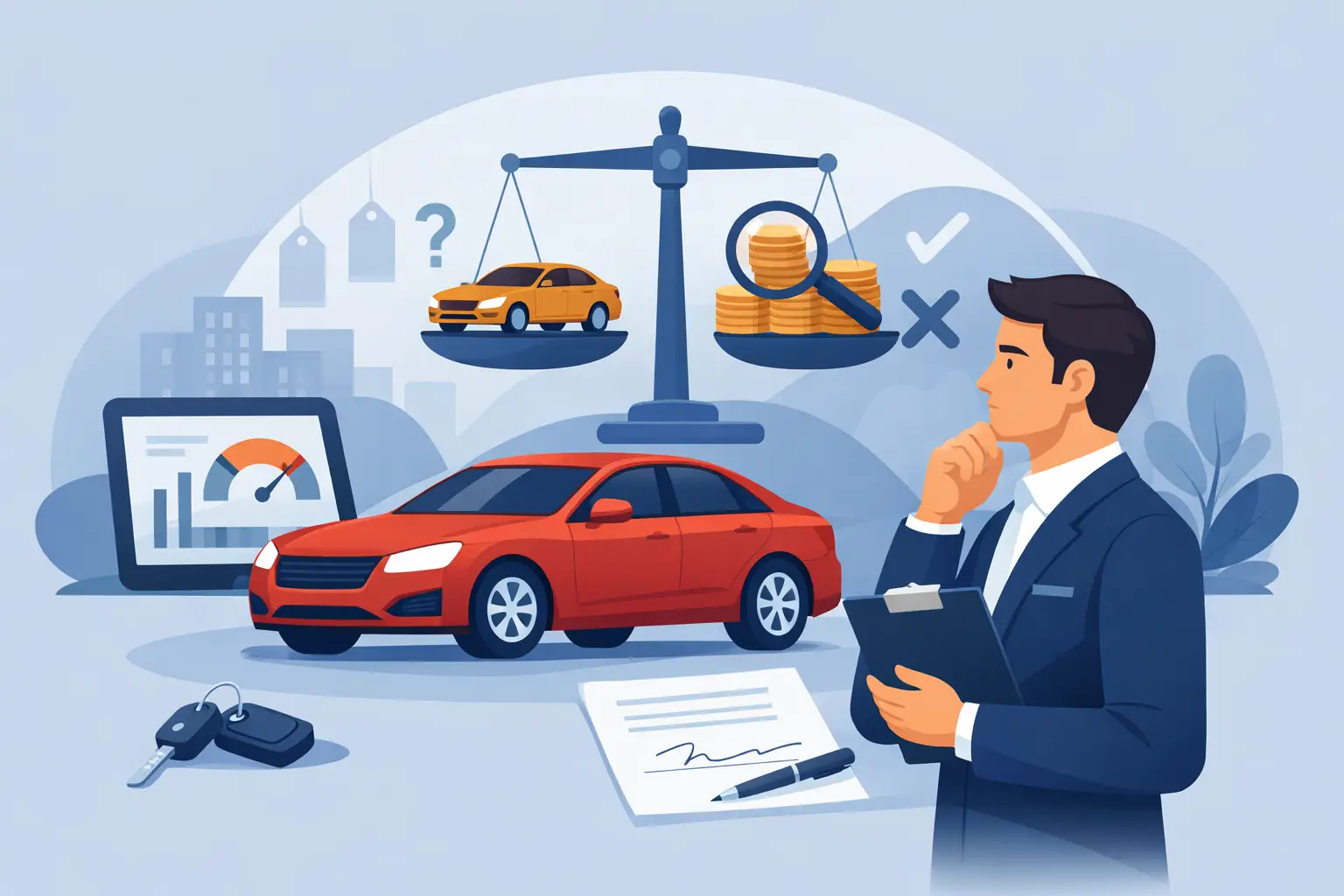
The number on the windshield is designed to get your attention. The number that matters is the one you will actually pay after taxes, fees, financing, add-ons, and any repairs the vehicle needs next month. If you are asking, “is this car price fair?”, you are already doing the smart thing: slowing down before a dealer’s urgency, a clean detail job, or a “today only” offer makes the decision for you.
A fair car price is not always the lowest advertised price. It is a price that makes sense for that specific vehicle, in that condition, with a transparent deal structure. You need to look at the whole transaction, not just one appealing number.
What a fair car price actually means
A fair price sits close to the current market value for a comparable vehicle, then accounts for the details that make one car worth more or less than another. The right comparison is not simply the same year, make, and model. Trim level, mileage, accident history, ownership history, location, maintenance records, tires, options, and title status can all move the value.
For example, two 2021 SUVs may look identical in an online search. One has 32,000 miles, a clean history report, service records, and new tires. The other has 61,000 miles, prior collision damage, and worn brakes. They should not carry the same price, even if their listings use the same headline model name.
Fair also does not mean that the seller is making no profit. Dealers have overhead, reconditioning costs, and a business to run. A reasonable margin is different from padding a deal with unexplained charges or presenting a high price as non-negotiable because “someone else is coming to see it.” Your goal is not to win a contest against the seller. It is to avoid paying more than the car and the deal justify.
How to tell if this car price is fair
Start by separating the vehicle price from the total out-the-door price. Ask for a written breakdown that shows the selling price, dealer fees, taxes, registration, required add-ons, trade-in figures, and financing terms. If a seller will not clearly show the numbers, that is a reason to pause.
An advertised price can be technically real and still lead to an expensive transaction. Some dealerships advertise a low number, then add a documentation fee, protection package, nitrogen-filled tires, paint coating, VIN etching, theft products, or accessories you never requested. Some fees may be legitimate and required in your state. Others are negotiable or optional, regardless of how they are described in the showroom.
Compare the out-the-door price with similar vehicles available in your area, while also looking at nearby markets if your search radius allows it. Use several listings rather than one. A single unusually cheap vehicle may have an accident history, a branded title, missing equipment, or a price that depends on financing through the dealer.
Then ask whether the vehicle earns its price. Low mileage and a desirable trim can support a premium. So can recent major maintenance, a clean inspection, excellent tires, and documented care. On the other hand, a car with warning lights, uneven tire wear, cosmetic damage, overdue maintenance, or a history of accidents deserves a discount. A clean-looking interior does not erase mechanical risk.
Check the exact trim and equipment
“Model” is not enough. A base trim and a premium trim can be thousands of dollars apart, and sellers sometimes use broad descriptions that blur the difference. Verify the VIN, trim, drivetrain, engine, transmission, and major packages. Confirm that the listed features are actually on the vehicle.
This matters especially with trucks, luxury vehicles, hybrids, EVs, and popular family SUVs. Four-wheel drive versus two-wheel drive, battery condition, towing equipment, panoramic roof packages, and driver-assistance features can materially change value. Do not pay for equipment that is missing, inoperative, or merely promised.
Treat condition as part of the price
A vehicle history report is useful, but it is not a substitute for an inspection. Not every repair, accident, flood event, or maintenance issue appears in a report. A pre-purchase inspection can identify leaks, suspension wear, brake life, tire age, body repairs, scan-code issues, and signs that the vehicle has been poorly maintained.
Think of inspection results as negotiating evidence. If a vehicle needs $1,500 in tires and brakes soon, the asking price may no longer be fair even if it looked competitive on a listing site. You can ask the seller to repair the items, reduce the price, or walk away. Walking away is a valid outcome when the math does not work.
Do not let the monthly payment hide the real cost
A seller can make almost any vehicle look affordable by stretching the loan term. That does not make the price fair. It can mean you pay substantially more interest and stay upside down on the loan for longer.
Focus first on the out-the-door price and the amount you are financing. Next, compare the annual percentage rate, loan length, down payment, trade-in allowance, and total of payments. A lower monthly payment is only a win if the overall terms still protect you.
Be especially careful when a dealer combines several conversations into one: the price of the car, your trade-in, your down payment, and your monthly payment. Negotiate and evaluate each piece separately. If the car price is solid but the trade-in offer is weak, the overall deal may still be unfair.
Optional products deserve the same scrutiny. Service contracts, GAP coverage, maintenance plans, wheel and tire protection, and theft-recovery products can be useful for some buyers. They are not automatically bad. But their value depends on coverage, exclusions, price, and whether you can obtain comparable protection elsewhere. Never let an add-on become part of the deal simply because it appears on a worksheet.
Signs the price needs a second look
Pressure is not proof of a bad deal, but it often keeps buyers from asking the questions that reveal one. Slow down if the seller will not provide an out-the-door number in writing, changes figures after you arrive, or keeps redirecting you to the monthly payment.
Other warning signs include a price that requires confusing rebates, a vehicle history report that does not match the seller’s story, unexplained add-ons, or a refusal to allow an independent inspection. Be cautious when a “certified” label is used without clear documentation of what certification includes and who stands behind it.
Private-party purchases need the same care. A lower price can be attractive, but you still need to verify the title, VIN, lien status, condition, and seller identity. If the seller pushes for a rushed payment or refuses an inspection, the discount may not be worth the risk.
Know when a higher price can still be reasonable
Sometimes the best vehicle is not the cheapest one. Paying more for a well-maintained car with a clean title, strong service history, and verified condition can cost less over the next few years than buying a cheaper vehicle with deferred maintenance.
The key is being able to explain the premium with facts. “It is the nicest one on the lot” is not enough. “It has 20,000 fewer miles, new tires, documented maintenance, no accident history, and passed an independent inspection” is a real value case.
That distinction helps you make a confident decision without chasing a bargain that turns expensive after the sale.
Get a buyer-side second opinion before you commit
Car sellers handle these transactions every day. Most buyers do not. There is nothing wrong with asking for independent help when the deal feels complicated, the vehicle has a questionable history, or the numbers keep shifting.
Auto Ally Marketplace can connect buyers with practical support for pricing validation, deal review, negotiation guidance, and inspection coordination. A second opinion can turn a vague feeling that something is off into clear next steps, whether that means negotiating, requesting repairs, changing lenders, or passing on the car.
The right car deal should hold up when you see every number, inspect the vehicle, and give yourself time to think. If it only works when you are rushed, it probably does not work for you.
Leave a Reply